

- Home
- Products
- HOT
- Technology
- Service
- Resources
- About
- Contact
- All
- Product Name
- Product Keyword
- Product Model
- Product Summary
- Product Description
- Multi Field Search

Views: 0 Author: Site Editor Publish Time: 2026-07-01 Origin: Site


A sports visor is never just a visual accessory. It acts as primary structural protection for your face during intense athletic competition. Players and equipment managers rely heavily on this clear shield. It must deflect high-speed projectiles and absorb massive kinetic energy.
Buyers often over-prioritize surface coatings like fog or scratch prevention. They look for optical clarity first. Consequently, they neglect the substrate's shatter threshold. This dangerous oversight leads to catastrophic failure risks in high-velocity sports. A clear field of view means nothing if the plastic fractures upon impact.
You need to know how to evaluate a true high-performance shield. We will define the criteria for selecting proper face protection. You will learn how structural integrity and advanced optical coatings coexist. By understanding these concepts, you can choose gear where safety and visibility never compromise each other.
Many athletic programs fall into a dangerous procurement trap. They purchase inexpensive shields based solely on anti-fog promises. Cheap acrylics can hold chemical coatings perfectly well. However, these brittle plastics shatter violently under direct, high-velocity impacts. Imagine a hockey puck, a swinging cleat, or a helmet-to-helmet collision striking a rigid acrylic shield. The material splinters into jagged shards. This reaction creates a severe laceration hazard for the athlete.
You must evaluate the core material before looking at any surface treatments. Polycarbonate serves as the gold standard for impact resistance. Unlike rigid acrylic or basic PETG, polycarbonate absorbs kinetic energy actively. It manages this energy transfer through microscopic flex rather than catastrophic fracturing. When a heavy object strikes polycarbonate, the material bows slightly inward. It redistributes the impact force across the entire shield surface. It then returns to its original shape.
Optical clarity under physical stress separates premium substrates from budget alternatives. Manufacturers must curve these impact-resistant materials to fit helmet profiles. Inferior plastics stretch unevenly during this curving process. This stretching creates prismatic distortion. Players look through the shield and see shifted or bent images. Premium optical-grade polycarbonate undergoes precise thermal injection molding. This careful process aligns the polymer chains perfectly. It prevents visual distortion even when the material bends under severe stress.
Applying advanced surface coatings introduces a unique trade-off risk. Manufacturers use high-heat curing processes to bond anti-scratch chemicals to the plastic. This intense heat can theoretically weaken inferior plastics. It degrades the substrate's tensile strength. Premium manufacturers engineer their curing ovens meticulously. They control the temperature gradients perfectly. This precision maintains the polycarbonate's maximum impact resistance while permanently bonding the protective surface layers.
| Material Type | Impact Response | Optical Distortion Risk | Safety Rating Suitability |
|---|---|---|---|
| Standard Acrylic | Shatters upon high-velocity impact | High (when curved) | Fails safety standards |
| Basic PETG | Dents easily, minimal flex | Moderate | Insufficient for contact sports |
| Optical-Grade Polycarbonate | Absorbs energy through flex | Low (maintains visual fidelity) | Passes NOCSAE / HECC criteria |
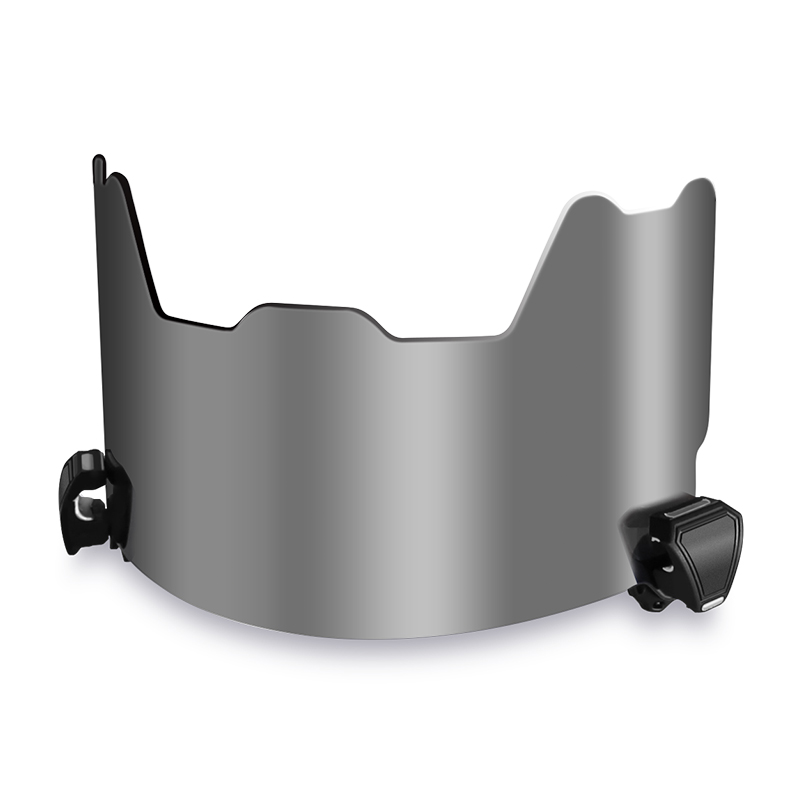
Engineers face a complex challenge when designing protective optics. Players need extreme scratch protection on the outside. Simultaneously, they require aggressive moisture management on the inside. Manufacturers solve this problem using differential coating technology. They apply completely different chemical structures to each side of the shield. This dual-treatment process guarantees maximum performance in unpredictable athletic environments.
The exterior surface acts as the primary impact zone. Polycarbonate inherently possesses a somewhat soft surface. Left untreated, it scuffs easily. Manufacturers apply hard-coatings to protect this softer substrate from micro-abrasions. They typically use polysiloxane-based solutions. These industrial-grade polymers form a microscopic armor layer over the plastic. This layer deflects incidental contact from facemasks, gloves, and artificial turf.
Scratch prevention directly impacts player safety. Micro-scratches trap external light. They catch stadium glare or bright sunlight. This trapped light scatters across the plastic surface. The resulting glare effectively blinds the athlete during crucial plays. If an athlete cannot see an approaching defender, the underlying impact resistance becomes useless. A flawless exterior coating prevents this dangerous visual impairment.
The interior surface operates in a completely different microclimate. It serves as the breath zone. Manufacturers must manage rapid temperature changes and high humidity here. They utilize specific hydrophilic coating properties. A hydrophilic layer attracts moisture. It forces tiny water droplets to spread out flat into an invisible, continuous film. This spreading action prevents opaque condensation droplets from forming.
Managing moisture proves especially crucial in cold-weather environments. Athletes exert massive physical energy on frozen surfaces. Their hot breath hits freezing plastic constantly. A premium ice hockey helmet visor relies on these baked-on hydrophilic layers to maintain clarity. Inferior hydrophobic coatings simply repel water. Repelled water forms beads. Beaded water distorts vision and ultimately freezes onto the plastic.
Marketing departments frequently use buzzwords like "shatterproof" or "military-grade." You must move past these empty claims. True authoritativeness requires standardized testing criteria. Independent laboratories subject these shields to brutal physical abuse. They measure exactly how much kinetic energy the polycarbonate can handle before failing. Purchasing uncertified equipment introduces massive liability risks for coaches and organizations.
Evaluating any football helmet visor requires verifying specific baseline certifications. The National Operating Committee on Standards for Athletic Equipment (NOCSAE) sets these essential guidelines. NOCSAE testing drops heavy, weighted objects directly onto the shield at various ambient temperatures. If the shield cracks, dislodges, or bends enough to contact the face, it fails. Look for the NOCSAE stamp etched directly into the plastic.
Hockey environments require different testing parameters. The Hockey Equipment Certification Council (HECC) mandates strict impact standards for cages and clear shields. Testers fire frozen pucks at the plastic at speeds exceeding 70 miles per hour. They conduct these tests in sub-freezing laboratory conditions. Cold temperatures naturally make plastics more brittle. A HECC-certified shield guarantees the polycarbonate will flex properly even in the coldest rinks.
Broader industrial standards also provide valuable reference points. The ANSI Z87.1+ standard indicates high-velocity and high-mass impact resistance. Manufacturers shoot steel ball bearings at the plastic to test penetration thresholds. EN166 serves as the European equivalent standard. Equipment bearing these marks proves it survived rigorous, repeatable scientific stress testing.
Buyers must learn to spot dangerous red flags in the marketplace. Beware of cheap "universal fit" options sold through unverified online vendors. These products often lack third-party laboratory verification. They might feature impressive packaging, but they skip expensive certification processes. Uncertified shields often utilize weak mounting clips. These clips shear off during a tackle, turning the loose plastic into a dangerous projectile.
A premium shield only performs as well as its maintenance protocol. Real-world application destroys many high-quality products prematurely. Teams often invest in top-tier polycarbonate gear. They then ruin it within weeks through poor handling. Establishing a strict standard operating procedure (SOP) for equipment care prevents this degradation.
The locker room environment presents a massive chemical hazard. We call this the cleaning paradox. Equipment managers instinctively reach for heavy-duty cleaners to sanitize gear. Common locker room chemicals destroy advanced optical treatments instantly. Ammonia-based glass cleaners will strip factory anti-fog layers upon first contact. Harsh industrial solvents melt polysiloxane hard-coats.
Chemical incompatibility goes deeper than surface damage. Harsh solvents attack the polycarbonate molecular structure. They cause a phenomenon known as "crazing." Crazing appears as a network of microscopic, spider-web cracks deep inside the plastic. These micro-cracks destroy the material's ability to flex. A crazed shield will shatter upon impact, completely negating its original safety rating.
You must follow strict best practices for coating longevity. Implement these daily habits to protect your equipment investment:
Procuring reliable face protection requires a systematic approach. You cannot leave athlete safety to guesswork. Equipment managers and individual buyers need a concrete framework for evaluating options. Treat the selection process as a rigorous audit of the manufacturer's engineering capabilities.
Follow these specific checklist nodes before finalizing any purchase decision. If a product fails any of these steps, remove it from your shortlist immediately.
An effective athletic shield requires a flawless integration of chemistry and physics. You must treat impact resistance and optical coatings as an integrated system. They are never separate features. Exceptional scratch resistance holds zero value if the underlying plastic fractures. Perfect impact deflection fails its purpose if micro-scratches blind the player.
Compromising on the base material to save money introduces unacceptable safety risks. The core substrate anchors all trustworthiness in athletic protection. You must demand optical-grade polycarbonate. You must insist on differential dual-coatings. Furthermore, you must verify all third-party laboratory certifications before outfitting any athlete.
Take proactive steps today to secure your gear. Review the technical specification sheets of your current equipment. Request material samples from verified suppliers. Consult with a specialized product engineer to ensure your entire team meets mandated compliance evaluations for the upcoming season.
A: Polycarbonate maintains its impact strength for years, but exposure to harsh chemicals or severe UV radiation can cause brittleness. The structural integrity outlasts the surface coatings if maintained properly. Keep the shield away from ammonia and store it in temperature-controlled environments.
A: "Shatterproof" is a marketing term; no material is infinitely indestructible. "Impact-resistant" paired with a NOCSAE or ANSI rating is the scientifically accurate and legally compliant terminology buyers should look for. Always trust certified engineering data over promotional packaging.
A: While possible, aftermarket sprays offer temporary relief and can chemically interact with factory anti-scratch coatings, causing smearing. Factory-baked dual coatings (inner anti-fog, outer anti-scratch) provide permanent, superior performance without chemical conflicts. We strongly recommend relying on original factory treatments.

