

- Home
- Products
- HOT
- Technology
- Service
- Resources
- About
- Contact
- All
- Product Name
- Product Keyword
- Product Model
- Product Summary
- Product Description
- Multi Field Search

Views: 0 Author: Site Editor Publish Time: 2026-07-15 Origin: Site


Stepping onto the ice requires more than raw skill and sharp skates. Your protective gear ultimately defines your safety during every intense shift. Selecting an ice hockey player helmet is a critical decision. You must carefully balance biomechanical safety, optical clarity, and thermal comfort. Let us establish a harsh reality upfront. No helmet on the market can completely eliminate concussion risks. Modern headgear design has a different primary goal. It aims to manage linear and rotational impact forces effectively. It also exists to prevent catastrophic facial trauma when collisions happen.
Our purpose here is straightforward. We provide a transparent, engineering-focused evaluation framework. We want to help players and equipment managers make highly informed decisions. You will learn how to navigate foam densities, airflow channels, and facial protection tradeoffs. This knowledge ensures you purchase compliance-ready gear for your upcoming season.
A poorly fitted helmet compromises everything. It limits your peripheral vision during fast gameplay. More importantly, it ruins impact absorption. If the shell shifts upon impact, the protective foams misalign from your skull. Advanced foam technologies become entirely useless if they cannot compress against the head properly. Safety begins with a secure, motionless fit.
Manufacturers utilize different foam densities to handle impact forces. Traditional helmets often feature VN foam. Vinyl Nitrile provides a softer, very comfortable feel against the head. It molds to your head shape over time. Engineers favor VN foam because it handles low-energy impacts effectively. However, modern high-end helmets use EPP foam. Expanded Polypropylene is highly rigid and incredibly lightweight. Designers engineer EPP specifically for high-velocity impacts. Brands often pair EPP foams alongside gel pods or comfort liners to manage sweat and rotational forces.
| Foam Technology | Primary Characteristics | Impact Specialty | Player Experience |
|---|---|---|---|
| VN (Vinyl Nitrile) | Soft, pliable, traditional feel | Low-energy, frequent bumps | Molds to head shape over time |
| EPP (Expanded Polypropylene) | Rigid, dense, ultra-lightweight | High-velocity, severe collisions | Requires added comfort comfort liners |
| Smart Foams / Gels | Variable density, rate-sensitive | Rotational and shearing forces | Premium comfort, excellent sweat control |
Adjustment mechanisms have evolved significantly over the past decade. Old helmet shells relied on traditional dual-screw systems. You needed a screwdriver on the bench to fix your fit. Modern designs utilize tool-free, multi-axis adjustment shells. You can expand the length and width independently. This 3D adjustment capability ensures the shell contours to asymmetrical head shapes perfectly.
You must perform the "Shake Test" protocol before buying. Put the helmet on your head. Lock the adjustment clips down firmly. Shake your head vigorously from side to side. Nod up and down quickly. You must assess the fit strictly. You need zero independent movement between the padding and your skin. The front rim must sit flush against your brow line. The occipital lock must secure the base of your skull completely. If it rattles, size down immediately.
Hockey represents a high-exertion sport played in cold arenas. This environment creates a unique user pain point. Excessive heat buildup inside the shell leads to premature fatigue. Sweat pours freely into the eyes. This moisture increases the fogging of visors and bubbles. True thermal regulation is absolutely vital for peak performance.
Airflow engineering goes beyond mere aesthetics. Many buyers simply count the holes on a helmet. This is a flawed approach. We must differentiate between passive exterior vents and active internal channeling. Passive vents simply expose the inner foam to ambient air. Active internal channels work dynamically. They pull cold air in through the front vents as you skate. They push hot exhaust air out the back of the shell. This active system cools the scalp efficiently.
Liner moisture management is another crucial factor. Old foam padding absorbed water like a dense sponge. Helmets became incredibly heavy and foul-smelling by the third period. Modern padding systems actively resist water absorption. They use closed-cell foams and hydrophobic fabrics. These materials keep the helmet lightweight. They maintain a hygienic environment over a full 60-minute game.
We must issue a caveat emptor regarding ventilation. Highly ventilated helmets often sacrifice structural shell real estate. More vents mean less protective plastic. The best designs optimize vent placement carefully. They maximize internal airflow without compromising safety certifications. Always inspect the structural bridges between the vent holes. They must feel rigid and unyielding under pressure.
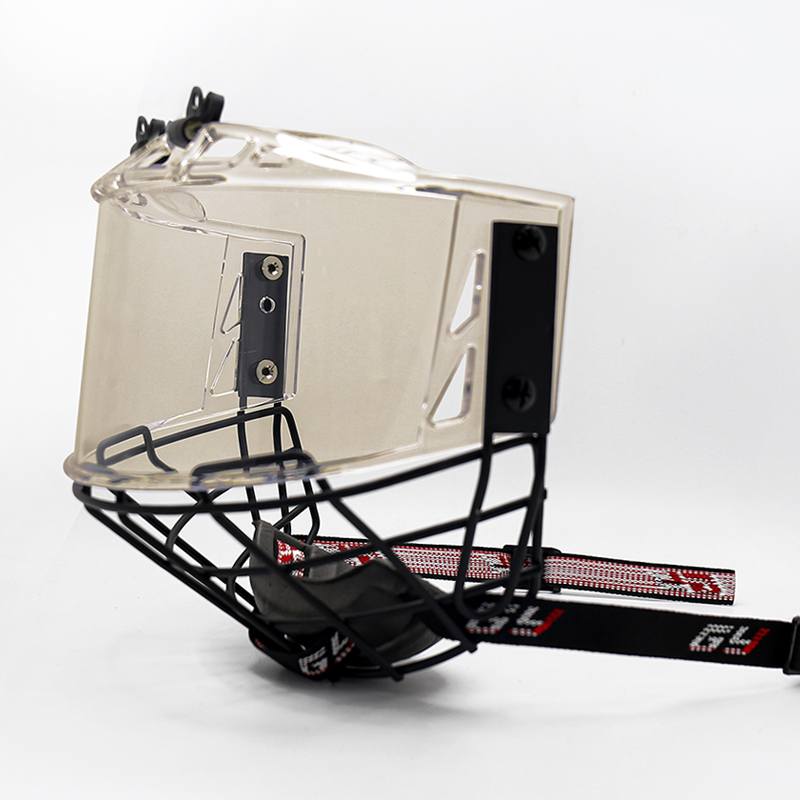
Choosing an ice hockey helmet with cage or visor involves serious trade-offs. You must categorize your options based on player age and league rules. Personal tolerance for visual obstruction also plays a massive role. We break down the primary facial defense systems below.
A full face steel hockey cage provides maximum durability. It offers unparalleled airflow and supreme structural integrity. Many players fear the classic "prison bar" effect. However, vision nuances have improved dramatically. Manufacturers now use thinner alloy bars. They implement flatter interior profiles to trick the optic nerve. You can choose between oval and straight wire geometries. Oval wires reduce glare effectively. Maintenance is delightfully minimal. You face zero fogging issues during a game. You simply need to perform routine physical checks. Inspect the cage for bent wires or rusted welds regularly.
Half-visors deliver incredible optical clarity. You enjoy completely unobstructed lower vision. You can see the puck at your feet instantly. Professionals and adult leagues prefer them where permitted. However, the risk profile is exceptionally high. A half-visor leaves your teeth and jaw completely exposed. Errant sticks and deflected pucks cause severe dental trauma frequently. You must accept this heavy risk if you remove your full cage.
Hybrids represent a unique compromise. They combine a high-impact polycarbonate upper shield with a ventilated lower grid. This protects your teeth while maximizing upper vision. The fogging challenge remains the primary adoption risk. Manufacturers apply factory anti-fog coatings to the plastic. Despite this, moisture management requires constant effort. You will need aftermarket anti-fog sprays. You must maintain a clean bench-towel to wipe the shield between shifts. Scratches will also catch arena glare, ruining your visual clarity.
You cannot judge helmet safety by visual inspection alone. Authoritative standards dictate equipment legality. Organizations like HECC, CSA, and ASTM manage strict impact testing protocols. They strap helmets to heavily instrumented headforms. They drop them onto steel anvils from specific heights. They measure the peak G-forces transmitted to the center of the headform. A helmet only hits the retail shelf if it passes these brutal threshold tests.
Protection has a definitive lifespan. Helmets expire legally and functionally. This expiration typically occurs 6.5 years from the exact date of manufacture. You might wonder why helmets degrade if they sit in a bag. Prolonged UV exposure weakens the plastic shell. Sweat acidity breaks down the industrial glues holding the foam. Frequent micro-impacts degrade the foam elasticity permanently. The plastic shell eventually loses its structural integrity. It becomes brittle in freezing arenas.
League compliance is a strict reality. Referees and league managers actively check expiration stickers before tournaments. They look at the HECC or CSA sticker on the rear shell. A non-compliant helmet means immediate removal from the ice. Officials hold zero tolerance for expired headgear. Do not peel these stickers off. You will lose your right to play.
Finding the perfect headgear requires a methodical approach. We recommend following a structured decision framework. This prevents impulse purchases based solely on brand logos or matching team colors.
Our final assessment is crystal clear. The best protective headgear is rarely the most expensive one on the wall. The best choice is the one fitting your skull perfectly. It must sit flush, resist shifting, and comply with current safety certifications. Do not compromise on the fit to save money.
We encourage you to take immediate action. Measure your exact head circumference accurately with a soft tape before purchasing. Check your current gear for expiration dates today. Finally, proactively order compatible replacement hardware. Keep extra screws, J-clips, and premium anti-fog solutions in your hockey bag at all times.
A: Check the HECC or CSA certification sticker located on the rear exterior shell. This expiration date is based strictly on the manufacture date, not the purchase date. Once a helmet passes this printed deadline, it is legally expired. Referees check these stickers routinely during pre-game inspections.
A: Generally yes, due to broad industry standardization. However, mixing different brands can sometimes cause slight sizing mismatches at the J-clips and temple mounting brackets. We highly recommend brand-matching whenever possible. This ensures optimal fit geometry and proper impact force transfer.
A: Not necessarily. Modern titanium and thin-wire stainless steel cages are incredibly light. They are frequently lighter than full polycarbonate bubble shields. Additionally, a steel grid completely eliminates the risk of mid-game fogging, giving you reliable performance throughout the entire game.
A: Address the moisture issue proactively. Apply dedicated anti-fog sprays before every ice session. Utilize proper shell ventilation by avoiding overly tight chin straps that restrict airflow. Always keep the shield physically clean of dried sweat, skin oils, and locker room dust.

