

- Home
- Products
- HOT
- Technology
- Service
- Resources
- About
- Contact
- All
- Product Name
- Product Keyword
- Product Model
- Product Summary
- Product Description
- Multi Field Search

Views: 0 Author: Site Editor Publish Time: 2026-07-02 Origin: Site


High-intensity outdoor training constantly pushes your physical limits. Whether you race motorcycles or dominate on the ice, you face brutal elements every single day. Extreme temperature shifts immediately trigger condensation. This fogs your lens and blinds you exactly when you need clear vision the most. Meanwhile, airborne dust, stray rocks, and regular handling leave permanent micro-scratches across your field of view.
Buyers constantly face a tough choice. Should you buy premium shields featuring integrated coatings, or should you buy cheap, bare visors and rely on temporary aftermarket sprays?
This article breaks down the safety benefits and realistic lifespans of advanced optical solutions. We will explore how physical visual distortions directly impact your reaction time. You will also learn the exact science behind dual-layer manufacturing. Finally, we provide a reliable framework to evaluate and choose your next high-performance shield.
Every athlete knows the sheer frustration of visual impairment during peak performance. We push our bodies hard. We sweat heavily. We radiate intense internal heat. When this internal body heat collides against freezing outdoor temperatures, condensation occurs instantly. This physiological trigger creates a dangerous, opaque layer of moisture right in front of your eyes. You cannot simply blink or will it away.
Micro-scratches introduce an equally dangerous, yet often ignored, physical threat. Tiny surface abrasions aggressively scatter incoming light across the polycarbonate exterior. You might not notice them during casual daytime runs. However, sports happen in highly dynamic environments. Under bright stadium lights, against low-angle sun glare, or facing oncoming headlights, these micro-scratches create blinding visual halos. This intense glare directly delays your neurological processing. You react slower to incoming obstacles. A fraction of a second often determines whether you successfully dodge an obstacle or suffer a severe physical impact.
Athletes also pay a heavy "distraction tax" when using untreated gear. You lose critical mental focus every time you lift a shield to vent trapped, humid air. You waste precious physical energy wiping away condensation mid-session. Muscle memory and flow state inevitably fail when you constantly interrupt your rhythm to manage equipment flaws.
Ice hockey serves as a prime real-world example of these combined risks. Players endure freezing ambient rink temperatures while generating massive amounts of body heat. Athletes relying on a clear hockey visor face immense risks if they use untreated gear. The fast-paced environment demands perfect optical clarity. A fogged lens means you lose track of the puck. A scratched lens means you misjudge a fast-approaching check. You simply cannot pause a competitive game to safely wipe down your protective gear.
Athletes typically choose between two main approaches to protect their vision. You can opt for budget-friendly aftermarket chemical sprays, or you can invest heavily in factory-integrated treatments.
Aftermarket sprays and wipes represent the standard budget approach. They offer a remarkably low barrier to entry. You can easily apply them to your older, legacy equipment without buying new hardware. However, they carry significant, frustrating drawbacks. You must continuously reapply these chemical treatments before every single training session. The application process requires pristine conditions. You must clean the surface meticulously, spray the chemical, wait for it to haze, and buff it out. If you miss a tiny spot, the lens streaks. Furthermore, rubbing chemicals onto a dry, untreated surface inherently traps microscopic environmental dust. This creates a sanding effect. Over time, this daily friction leads to gradual, permanent surface scratching.
Conversely, the premium approach involves a factory-integrated anti-fog anti-scratch visor. Manufacturers molecularly bond these chemical coatings directly to the raw polycarbonate. This advanced process ensures permanent or semi-permanent protection. Factory treatments apply evenly, guaranteeing uniform optical clarity across the entire curved lens. Some premium systems even utilize physical isolation barriers, like Pinlock inserts for motorsport helmets, to physically trap insulating dead air. These premium shields do carry a higher initial purchase price. They also require strict adherence to specific cleaning protocols to maintain their efficacy.
If we evaluate a standard twelve-month training cycle, the performance differences become incredibly obvious. Relying on cheap gear means continuous failure. You physically replace budget shields multiple times as they inevitably cloud over. You also spend countless hours reapplying temporary chemical sprays. In contrast, running one high-end, factory-treated shield provides uninterrupted, distortion-free vision all season long. It fundamentally removes the daily hassle and keeps you entirely focused on your athletic progression.
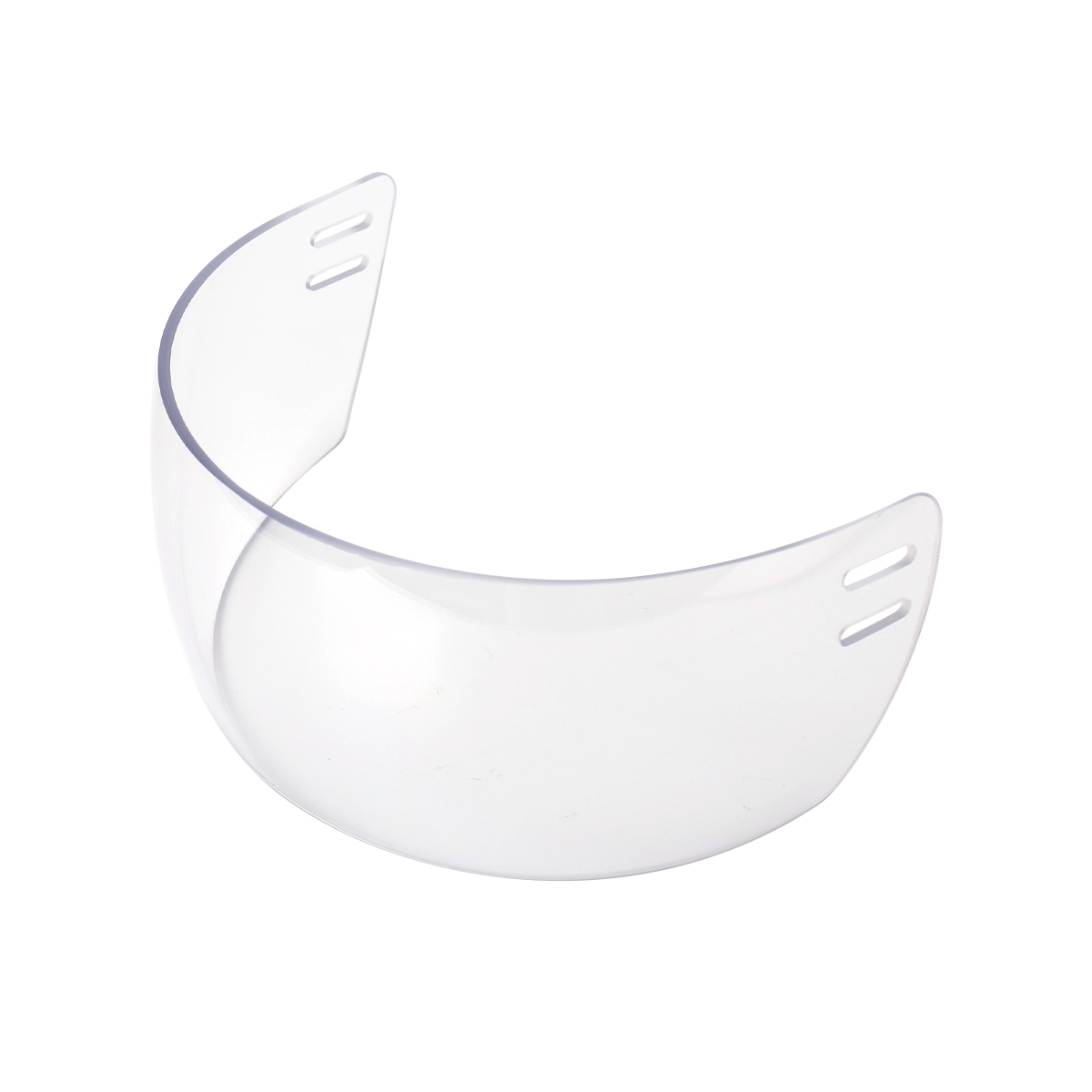
Premium protective shields rely on advanced industrial chemistry. They utilize two distinct layers to manage very different physical environmental threats.
The outer layer focuses entirely on impact and abrasion durability. Polycarbonate provides exceptional shatter resistance, but it remains physically soft and scratches effortlessly. Engineers solve this by applying UV-cured hard coatings to the exterior. They typically utilize siloxane or similar advanced polymer structures. Manufacturers dip or spin-coat the lens, then cure it under high-intensity ultraviolet light. This cross-links the polymers, creating a slick, rigid outer shell. This hardened layer deflects airborne dirt, glancing pebbles, and abrasive glove wipes. However, we must clarify realistic expectations. "Scratch-resistant" does not mean indestructible. The hardened shell prevents daily micro-abrasions, but it will not survive a direct scrape against rough concrete or sharp metal.
The inner layer tackles internal moisture. Condensation naturally forms as tiny, spherical water beads. These beads refract incoming light chaotically, causing opaque fog. Engineers apply specialized hydrophilic coatings to the interior face. These layers behave exactly like a microscopic sponge. They rapidly absorb excess airborne moisture. When they reach maximum capacity, they physically force the water to flatten out. Instead of opaque spherical beads, the moisture forms a continuous, flat, transparent film. You look right through it without noticing any visual distortion. Advanced shields sometimes incorporate thermal barriers as well, leveraging double-paned designs to physically block the extreme temperature differentials driving the condensation.
Understanding this compatibility matrix remains crucial for buyers. You simply cannot effectively replicate an industrial hard coating at home. Factory-applied outer layers require sterile cleanrooms and specialized curing ovens. Home-applied anti-scratch kits inevitably trap dust, dry unevenly, and create severe prismatic visual distortions. This reality makes factory integration a mandatory baseline for serious outdoor training equipment.
When evaluating new protective equipment, you need a reliable, objective framework. We highly recommend assessing four specific safety and performance criteria before making any purchase.
Review the evaluation criteria matrix below to streamline your decision.
| Evaluation Criteria | Key Metric | Why It Matters |
|---|---|---|
| Optical Clarity | Class 1 Rating | Prevents peripheral prismatic distortion and eliminates light scattering. |
| Impact Certification | HECC, ECE, ANSI Z87.1 | Ensures the polycarbonate base withstands blunt force trauma safely. |
| Coating Durability | Maximum Wash Cycles | Dictates how many months the factory treatment will actively absorb sweat. |
| Ventilation Integration | Airflow Intake Vents | Mechanical airflow prevents the inner sponge effect from completely oversaturating. |
First, examine the optical clarity and distortion rates. Curving a piece of thick plastic naturally bends incoming light. Poor manufacturing exacerbates this prismatic distortion, causing extreme eye fatigue and poor depth perception. Always look for Class 1 optical ratings. Manufacturers should explicitly guarantee zero visual distortion, particularly at the extreme peripheral edges.
Second, verify the impact certification. Chemical coatings matter very little if the physical lens shatters upon impact. You must ensure the shield meets relevant industry compliance standards. Hockey players must look for HECC or CSA certification stickers. Motorsport riders must confirm DOT, ECE, or Snell safety standards. Tactical and shooting sports require strict ANSI Z87.1 high-velocity impact ratings.
Third, assess the coating durability. Nothing lasts forever, and hydrophilic sponge layers naturally degrade over time. Check the manufacturer's stated lifespan regarding wash cycles. You need to determine exactly how many standard wash cycles the interior layer can withstand before the moisture-absorbing properties begin to fail.
Fourth, evaluate fitment and ventilation. Chemical layers cannot do all the heavy lifting alone. A hydrophilic coating eventually saturates completely under extreme exertion. Evaluate your helmet design carefully. Ensure it provides adequate baseline mechanical airflow. Strategic intake vents push fresh air across the interior lens, evaporating the flattened moisture film back into the atmosphere.
Your personal maintenance routine directly determines your gear's ultimate lifespan. The biggest single point of failure always traces back to user error during routine cleaning. Improper care rapidly strips away the complex, delicate chemical structures bonded to the polycarbonate.
We highly recommend following a strict standard cleaning protocol. You must use strictly cold or lukewarm water to rinse away loose grit first. You may use a mild, pH-neutral soap only if the manufacturer explicitly permits it in the instruction manual. Never rub the interior surface aggressively. Instead, gently pat it dry. Always use a meticulously clean, premium microfiber cloth. Microfiber traps dirt safely inside its synthetic weave rather than dragging it across the soft lens.
You must actively watch out for severe chemical red flags. Explicitly avoid using any ammonia-based household glass cleaners. Ammonia chemically attacks polycarbonate, causing it to become brittle and eventually crack. Never dry your lens with paper towels. Paper products consist of coarse wood pulp fibers that act like ultra-fine sandpaper. Furthermore, never apply automotive water-repellents. These harsh, solvent-based formulas will aggressively melt and permanently cloud sensitive athletic plastics.
Regarding expected lifespan, athletes should set highly realistic timeframes. Intensive outdoor training exposes your gear to extreme sunlight, acidic sweat, and constant abrasive debris. Depending on your training volume and environmental harshness, a premium factory coating naturally degrades over one to three competitive seasons.
Ultimately, your specific environment dictates your gear requirements. For casual, low-intensity users operating in mild climates, a basic shield paired with aftermarket sprays might suffice. However, dedicated athletes constantly push different boundaries. For intensive outdoor training, the investment in a purpose-built, dual-layer shield remains categorically worth it. It guarantees optical reliability, enhances your overall physical safety, and saves significant maintenance time.
Take a moment to audit your current training environment. Assess your local humidity levels, sweat rates, and daily abrasion risks. Check your specific league's manufacturer compliance ratings. Once you map out your specific needs, you can confidently shortlist the right brand to protect your vision effectively.
A: No. Most automotive glass treatments contain harsh solvents. These chemicals degrade, cloud, or weaken structural polycarbonate. They also aggressively strip away factory anti-scratch coatings. Always use plastics-safe formulas specifically designed for sports equipment to maintain structural integrity.
A: A high-quality integrated coating typically lasts one to two years under heavy training schedules. You must maintain it properly with fresh water and clean microfiber cloths. Using abrasive cleaning methods or harsh soaps will reduce this lifespan to just a few months.
A: No. An anti-scratch visor uses a hardened surface layer that resists micro-abrasions from dust, gloves, and minor impacts. It acts as a sacrificial barrier against daily wear. However, it will still scratch if you drop it on rough concrete or gouge it with sharp metal objects.
A: Yes. Once the factory hydrophilic layer has definitively failed, aftermarket sprays serve as a viable stopgap measure. However, your optical clarity will never fully return to original factory baselines. You must also accept the strict daily reapplication routines.

