

- Home
- Products
- HOT
- Technology
- Service
- Resources
- About
- Contact
- All
- Product Name
- Product Keyword
- Product Model
- Product Summary
- Product Description
- Multi Field Search

Views: 0 Author: Site Editor Publish Time: 2026-06-29 Origin: Site


In high-speed contact sports, a fraction of a second of compromised visibility is the difference between executing a play and sustaining an injury. Athletes rely heavily on clear sightlines to track fast-moving objects and anticipate opponent movements. Standard face shields rapidly fail under the dual threat of sudden temperature shifts and physical abrasions. Intense body heat clashes against cold exterior environments, causing immediate condensation. Simultaneously, gloves, flying debris, and errant sticks constantly batter the plastic surface.
Upgrading to a factory-treated anti-fog anti-scratch visor provides a measurable baseline of optical clarity and impact durability. Such a reliable shield directly influences player safety and overall performance on the field or rink. We will break down exactly how these advanced coatings function under extreme athletic stress. You will learn the stark differences between hydrophilic and hydrophobic defenses. Finally, we provide a concrete evaluation framework to help you choose the ideal protective gear.
Athletes push their bodies to the absolute limit during competition. This intense physical exertion creates severe environmental challenges for protective equipment. Standard, untreated plastics simply cannot handle these extreme conditions.
You generate significant heat and humidity when you play hard. The confined space inside a sports helmet traps this hot, moist air. When this trapped micro-climate clashes against colder external air, physics takes over. Moisture instantly condenses into thousands of microscopic water droplets on the interior plastic surface. You experience this rapid condensation as blinding fog. It completely ruins your depth perception. It eliminates your peripheral vision. A fogged shield leaves you vulnerable to blindside hits and missed passes.
Physical damage poses an equally severe threat to optical clarity. Contact sports guarantee constant abrasion. You face inevitable micro-scratches from artificial turf. Sharp ice shavings spray directly into your face. Opposing players drag rough, taped gloves across your helmet during scuffles. Even innocent mid-game habits cause severe damage. Players frequently use gritty towels or dirty jersey sleeves to wipe away sweat. These abrasive fabrics act like sandpaper. They leave permanent swirls and grooves on unprotected plastic surfaces.
Condensation and abrasion do not operate independently. They actively compound one another to destroy visibility. Deep surface scratches physically trap microscopic water droplets. They prevent trapped moisture from evaporating smoothly. Furthermore, these jagged grooves catch bright, artificial stadium lighting. They refract this light unpredictably across your entire field of view. You suffer from intense glare. Blinding "halo" effects suddenly appear around floodlights. These severe visual distortions hit hardest during critical, game-deciding moments.
Many programs attempt to save money by purchasing cheap, untreated plastics. This strategy backfires quickly. Cheap shields fail fast. They require constant, frustrating replacement cycles throughout a single season. You spend more money continuously replacing degraded plastics. Investing in premium coated optics upfront prevents this constant cycle of failure and replacement.
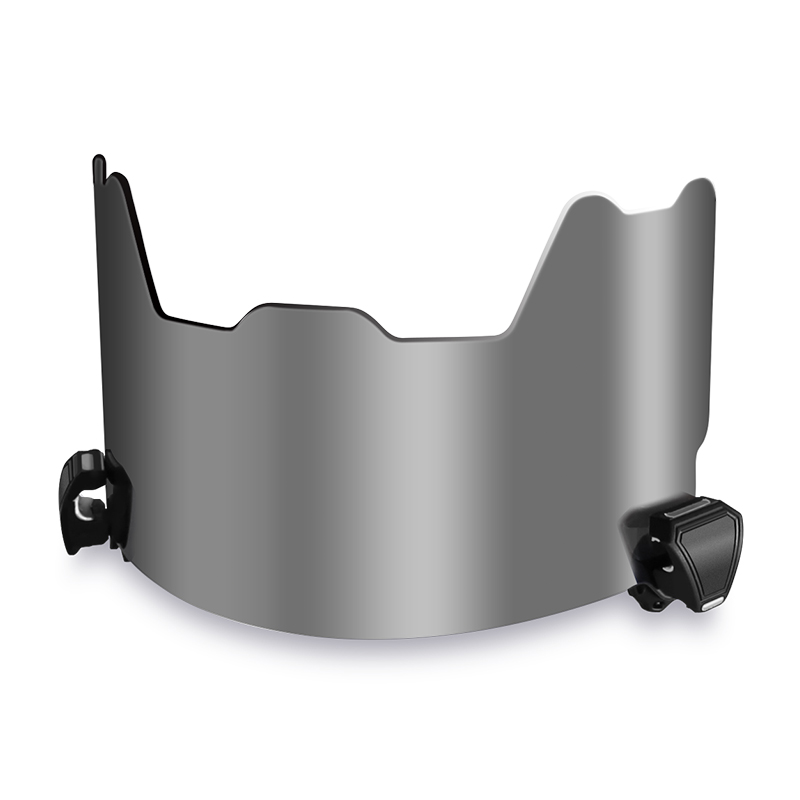
Modern sports optics rely on complex chemistry. Manufacturers apply specialized layers to polycarbonate bases to manipulate moisture and resist physical trauma.
Effective moisture management requires two distinct approaches. Hydrophilic coatings absorb moisture directly. They force condensing water to spread out into a continuous, microscopic flat film. This flat film prevents individual droplets from forming and scattering light. You retain clear vision because the light passes straight through the flattened water layer. Conversely, hydrophobic coatings actively repel water. They force moisture to bead up tightly and roll off the exterior surface. Premium shields often use hydrophilic layers on the interior and hydrophobic layers on the exterior.
Manufacturers engineer anti-scratch layers using advanced silica-based chemistry. This hard coating bridges the gap between soft, flexible polycarbonate and glass-like hardness. It creates a rigid outer shell. However, you must understand a critical limitation. These chemical layers are "scratch-resistant," not "scratch-proof." They successfully harden the exterior against glancing blows from sticks and flying turf. They will not survive intentional gouging or deep, direct impacts from sharp metal cleats.
Not all treatments offer equal durability. Factory treatments undergo a rigorous chemical bonding process. Manufacturers dip the shields in specialized vats and cure them under intense UV light. This bakes the protective layer permanently into the plastic substrate. In stark contrast, temporary aftermarket sprays sit loosely on top of the surface. You wipe them on, but sweat and friction quickly wipe them off. They degrade rapidly mid-game, leaving you completely unprotected when you need clarity most.
| Feature | Factory-Applied Coating | Temporary Aftermarket Sprays |
|---|---|---|
| Application Method | UV-cured chemical bonding | Manual wipe-on / spray-on |
| Durability | Lasts an entire competitive season | Degrades within a single game or practice |
| Optical Distortion | Zero distortion (precision applied) | High risk of streaking and hazing |
| Maintenance | Requires simple water rinsing | Requires constant reapplication |
Applying dual-chemical coatings to curved surfaces presents a massive manufacturing challenge. If liquid coats pool unevenly during the dipping process, the cured shield will warp incoming light. High-end manufacturers utilize robotic rotation during the curing phase. This ensures perfectly even distribution. Poorly manufactured shields suffer from varying thicknesses. This uneven application introduces severe visual distortion, causing headaches and motion sickness for athletes.
Different sports subject equipment to vastly different environmental extremes. The engineering focus must shift based on the specific threats found on the gridiron or the rink.
Gridiron athletes face a unique set of outdoor challenges. A dedicated American football visor must conquer dynamic weather and intense physical contact.
Threat Profile: Football players battle direct, blinding sunlight during afternoon games. They endure heavy rain and thick mud. Linemen face constant, brutal hand-to-face contact in the trenches. Fingers routinely poke through facemask gaps.
Feature Focus: Tint regulations play a major role here. High school and NCAA rules mandate clear shields for medical evaluation purposes. Pros and practice squads often utilize heavily tinted options. Manufacturers prioritize extreme shatter resistance. The plastic must absorb direct impacts from heavy helmets and sharp plastic cleats. They also emphasize highly hydrophobic exterior top-layers to rapidly shed heavy rain and wet mud.
The rink presents the ultimate thermal challenge. An ice hockey visor battles extreme cold alongside high-velocity impact threats.
Threat Profile: Hockey players skate in freezing ambient air while generating immense body heat. This creates the most aggressive temperature delta in modern sports. Furthermore, athletes must survive frozen, vulcanized rubber pucks traveling at 90 miles per hour. Errant carbon-fiber stick blades constantly whip toward the face during puck battles.
Feature Focus: Manufacturers dedicate maximum resources to heavy-duty anti-fog performance on the interior concave surface. The shield must aggressively flatten condensing sweat. They also engineer precise impact distribution limits. The mounting hardware must absorb and disperse kinetic energy away from the skull. Finally, engineers study airflow dynamics carefully. They design distinct aerodynamic profiles to push cold air down behind half-shields, aiding the internal hydrophilic layers.
You cannot judge a face shield merely by its appearance. You must evaluate the underlying engineering. Follow these strict criteria to ensure maximum safety and optimal performance.
Even the most advanced technology fails if you treat it poorly. Longevity depends entirely on how well you manage and maintain the equipment off the field.
The number one reason premium shields fail early is simple user error. Players frequently ruin their own gear in the locker room. Abrasive cotton towels scratch the hardened layers. Scraping mud off with a jersey sleeve causes permanent damage. The absolute worst mistake involves chemical glass cleaners. Products like Windex contain harsh ammonia and strong solvents. These chemicals instantly strip the factory-baked protective layers right off the polycarbonate base. Once stripped, the shield fogs instantly.
You must follow strict cleaning protocols to preserve your investment. Implement these mandatory maintenance steps:
Equipment managers must know exactly when to pull a shield out of rotation. Coatings eventually break down from UV exposure and repeated trauma. Look for localized clouding near the breathing zones. Watch for permanent milky hazing that water cannot wash away. Check the edges for physical flaking or bubbling where the chemical layer detaches from the plastic. Once you spot these warning signs, safely cycle the item out of your active inventory.
Use this streamlined checklist before finalizing any equipment purchase. It ensures you select gear that performs well and complies with all regulations.
Investing in advanced dual-coating technology provides a massive strategic advantage on the playing surface. By choosing factory-baked chemical treatments, you eliminate the constant distraction of sudden fog and blinding glare. Athletes who can see clearly react faster, execute plays with higher precision, and avoid dangerous blindside collisions.
While premium optics require a larger upfront investment and highly disciplined cleaning routines, the returns easily justify the switch. You gain uninterrupted visibility. You drastically elevate player safety. You maximize performance execution during the most chaotic moments of a game. Standard, untreated plastics simply cannot deliver these vital benefits.
Take immediate action to upgrade your team's protective gear. Review your current helmet setups to identify aging or degraded plastics. Check your specific league compliance requirements for tints and certifications. Finally, source your new shields exclusively from certified, optical-grade manufacturers who guarantee their chemical applications.
A: Manufacturing cost. Chemically bonding moisture-managing layers requires specialized facilities, robotic application, and UV-curing ovens. This complex process significantly drives up the baseline price of the helmet and the shield.
A: No. Buffing out a scratch physically removes the specialized factory coatings. This ruins the optical clarity and entirely destroys the anti-fog properties. Immediate replacement is required once deep scratches occur.
A: Yes, frequently. Many commercial sprays contain strong solvents or aggressive alcohols. These chemicals break down and strip away factory-applied hard coats. You should only use manufacturer-approved, neutral cleaning solutions.
A: With strict microfiber maintenance and standard game-use, it should last one full competitive season. However, heavy direct impacts or poor cleaning habits can reduce this functional lifespan to mere weeks.

