

- Home
- Products
- HOT
- Technology
- Service
- Resources
- About
- Contact
- All
- Product Name
- Product Keyword
- Product Model
- Product Summary
- Product Description
- Multi Field Search

Views: 0 Author: Site Editor Publish Time: 2026-07-06 Origin: Site


Selecting the right facial protection is a critical balance of visibility, breathability, and safety compliance. For equipment retailers, team purchasers, and competitive players, this choice directly impacts on-ice performance. It also determines long-term equipment durability. The core dilemma remains clear across all skill levels. Traditional wire cages offer zero-maintenance airflow and rugged reliability. Conversely, modern polycarbonate options promise completely unobstructed vision at the cost of potential fogging. You must weigh these operational realities carefully before committing to a purchase. Many players struggle to find the perfect fit for their specific rink environments. We created this neutral, evidence-based breakdown to solve this exact problem. It will help buyers align their inventory or personal equipment investments carefully. You will learn how actual rink conditions dictate material performance. We also explore how user priorities shape the final purchasing decision. This ensures your next choice maximizes both safety and visual clarity on the ice.
You cannot evaluate facial protection purely on aesthetics. Buyers must assess physical performance metrics and strict safety standards. Every piece of equipment must protect the wearer from high-velocity pucks and errant sticks. Understanding the underlying criteria helps you make an informed decision.
Certification is the fundamental starting point for any ice hockey cage. Governing bodies mandate strict testing protocols to ensure player safety. You must look for HECC (Hockey Equipment Certification Council), CSA (Canadian Standards Association), and CE (Conformité Européenne) approvals. These stickers validate impact resistance and structural integrity. Material failure behaves differently depending on your choice. A heavy impact might dent a metal wire. A dented wire compromises the grid's structural integrity. You must replace it immediately. Conversely, a polycarbonate shield might crack or spiderweb under extreme duress. Both failure modes mandate immediate replacement to maintain safety compliance.
End-users consistently complain about two specific issues. They either hate looking through a grid, or they hate managing condensation. This is the primary trade-off in facial protection. Players choosing metal grids must train their brains to ignore the wire bars. Those choosing clear polymers face a different challenge. They must actively manage moisture build-up in cold, humid rink environments. Your choice depends on which annoyance you can tolerate better.
Helmet balance significantly affects player comfort during a standard three-period game. We evaluate three core physical factors:
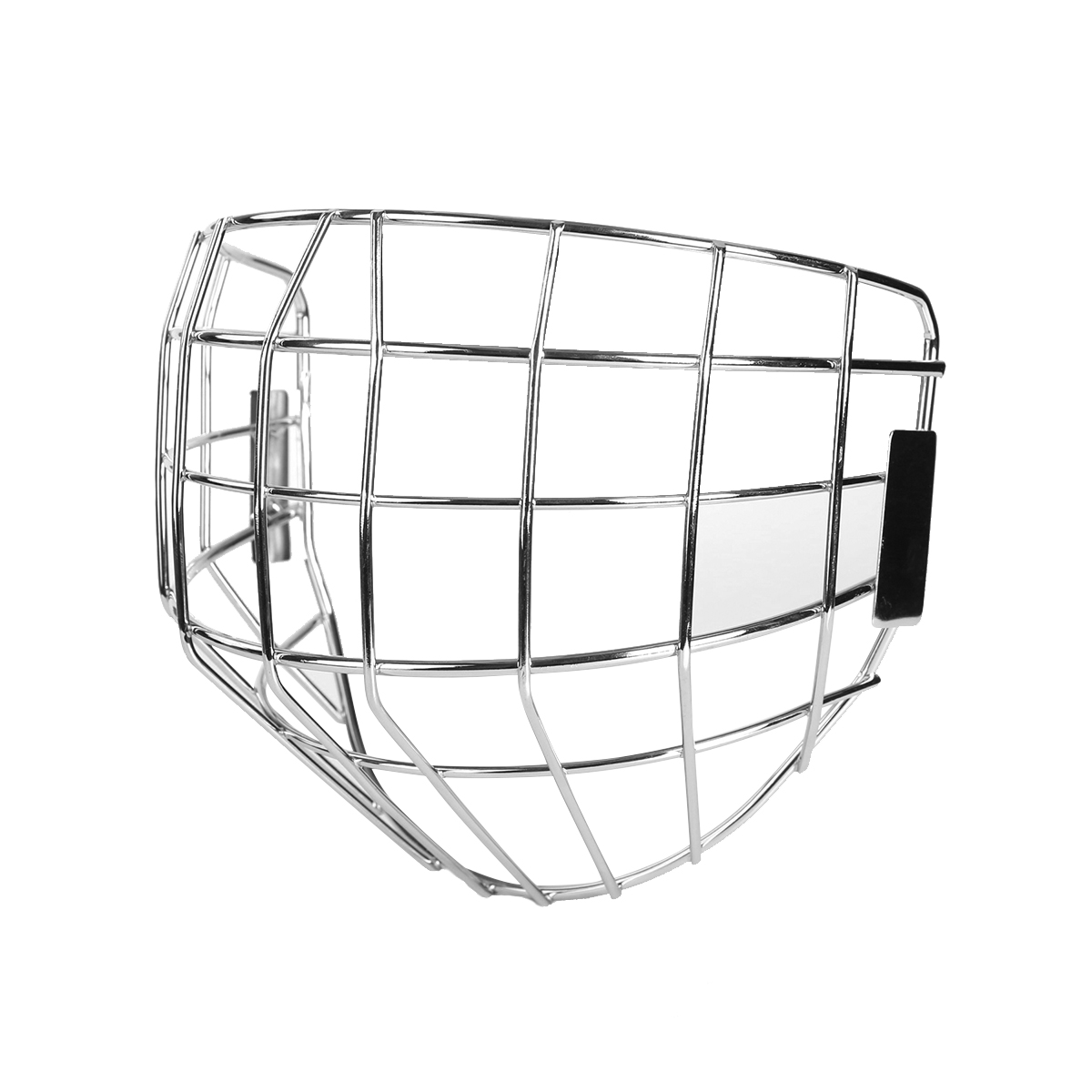
Metal cages dominate the minor hockey and entry-level markets. They provide rugged durability and require very little thought once attached to the helmet. They remain the industry standard for a reason.
Ice hockey demands massive oxygen intake during short, intense shifts. Wire grids offer distinct performance advantages here. They provide maximum breathability. Air flows freely to the face, cooling the player naturally. Furthermore, metal grids offer acoustic clarity. On-ice communication is vital for team success. A wire mask allows players to shout plays without muffling their voices.
Rink temperatures fluctuate wildly. Humidity control is often impossible in older arenas. Metal cages shine in these unpredictable environments. They offer absolute, zero-fog reliability. You never have to wipe a wire grid between shifts. Your vision remains consistent from the first puck drop to the final horn.
Manufacturers produce cages in several distinct materials. Carbon steel is the most common and cost-effective option. Titanium offers the same strength but at a fraction of the weight. However, titanium commands a premium price. Additionally, a chrome ice hockey cage offers distinct aesthetic appeal. Retailers often stock chrome variants to capture specific buyer demographics. Chrome finishes also provide specialized rust-resistance properties. This extends the product lifespan significantly.
Despite their popularity, metal cages carry notable drawbacks. You must consider these risks:
Best Practice: Always remove your helmet from your gear bag immediately after a game. Wipe the metal dry to prevent premature oxidation.
Some players refuse to look through metal bars. Full polycarbonate masks, often called "fishbowls," cater directly to this demographic. They prioritize optical clarity above all else.
High-impact polycarbonate offers tremendous optical advantages. It provides a crystal-clear, panoramic field of view. This clarity is especially beneficial for stickhandling. Players can track the puck at their feet without downward visual distortion. Eliminating the grid removes visual distractions entirely. You see the game exactly as it unfolds.
Many traditionalists question the strength of clear plastics. However, hockey-grade polymers boast exceptional energy-dispersion properties. When a stick or puck strikes the surface, the material flexes slightly. This microscopic flex absorbs and dissipates the kinetic energy. It protects the face just as effectively as rigid metal. Safety certifications prove their reliability.
We must address the reality of fogging transparently. Condensation is the enemy of the full-shield user. Heat radiating from the face meets the cold rink air. This creates instant moisture on the interior plastic. Most models feature factory-applied anti-fog coatings. These factory coatings work well initially. Eventually, they degrade. You must then rely on post-market sprays. Managing this condensation requires constant diligence on the bench.
Owning a clear shield requires strict care protocols. You cannot simply throw it into your bag. Rough handling causes micro-scratches. These tiny scratches catch arena lights and cause blinding glare. You must use microfiber cloths exclusively. Harsh chemicals degrade the plastic and strip away protective coatings. You must commit to this high-maintenance routine.
Common Mistake: Never wipe a fogged shield using your sweaty jersey. The abrasive fabric will instantly scratch the delicate polymer surface.
Equipment brands recognized the polarized market. They engineered a solution bridging the gap between metal and plastic. The hybrid mask merges the best attributes of both materials.
Hybrid designs utilize a structural blend. They feature a high-impact polycarbonate half-shield on top. This secures your peripheral and forward vision. Manufacturers pair this upper shield with a ventilated bottom half. Often, this is a polycarbonate hockey lower cage or a traditional wire bottom. This dual-material architecture provides the ultimate compromise.
Full polymer masks create a notorious "heat trap" around the mouth. Every exhalation bounces back onto the visor. The hybrid design solves this beautifully. The ventilated lower half allows hot breath to escape instantly. It drastically mitigates the breath-fogging effect. You get clear vision without the oppressive humidity.
We identify hybrids as a premium growth category. They target players who reject the traditional grid. Yet, these same players cannot tolerate full-mask humidity. Adult league players frequently adopt this style. They value their vision but lack the patience for constant anti-fog maintenance. Retailers should position hybrids as a luxury upgrade.
Hybrids offer excellent modular advantages. The upper visor usually sustains the most scratches over time. You do not need to discard the entire unit. Users can replace only the scratched upper shield. The lower jaw piece remains intact. This modularity softens the blow of replacement costs.
Understanding product features is only half the battle. Buyers must align their purchasing strategy with actual market demands. Different demographics prioritize different benefits.
Youth programs operate under strict budgets and regulations. Standard steel or chrome cages fit this market perfectly. They offer supreme cost-efficiency. Parents appreciate the zero-maintenance requirements. Kids notoriously neglect their equipment. A metal grid survives being tossed onto locker room floors. Stick to traditional metal for minor hockey inventory.
Adult players possess higher disposable incomes. They frequently prioritize performance and aesthetics over budget. This creates massive upsell potential for full polycarbonate masks and hybrid combos. Cater directly to players willing to manage maintenance. Pitch the superior vision. They will readily pay a premium for unobstructed sightlines.
You must factor in the climate of local rinks. Ice rinks vary drastically in air quality. Highly humid arenas make full polycarbonate a tougher sell. Summer hockey leagues often feature terrible ice conditions and heavy fog. Selling a full plastic mask here requires heavy anti-fog education. Conversely, well-ventilated, freezing rinks support polymer usage beautifully.
Smart buyers evaluate the upfront cost against the replacement frequency. Metal cages cost less initially. They also last several seasons unless dented or severely rusted. Polycarbonate models carry a higher entry price. They also scratch easily, requiring more frequent replacement. Hybrids offer a middle ground through modular parts. You must weigh these financial realities.
Face Protection Material Comparison
| Material Type | Upfront Cost | Airflow | Vision Clarity | Maintenance Level |
|---|---|---|---|---|
| Standard Metal Grid | Low | Excellent | Grid Obstruction | Low (Dry to prevent rust) |
| Chrome Steel | Medium | Excellent | Grid Obstruction | Low (Rust resistant) |
| Full Polycarbonate | High | Poor | Unobstructed | High (Anti-fog needed) |
| Hybrid Combo | Highest | Good | Unobstructed Top | Medium (Wipe visor gently) |
Neither material is objectively superior in every scenario. Success depends entirely on matching the material to the player's tolerance for maintenance. You must also prioritize airflow versus optical clarity based on personal preference. We recommend retailers start with a core inventory of traditional steel and chrome cages. These serve the broad base of hockey players effectively. From there, selectively test polycarbonate and hybrid models to gauge local market appetite.
Evaluate your local rink conditions carefully before making a final decision. Take immediate action to improve your on-ice experience. We suggest reviewing current helmet compatibility charts to ensure proper fitment. You can also request a sample unit for physical on-ice evaluation. The right facial protection will elevate your game safely and comfortably.
A: Yes, they mitigate condensation effectively. However, they do not entirely eliminate fogging during high-exertion shifts. You must reapply them regularly to maintain visibility in humid rinks.
A: You should replace it when the HECC certification expires. Additionally, perform routine visual inspections. Replace the unit immediately if you find bent wires, rusted joints, or deep polymer scratches.
A: No. You must verify brand compatibility requirements beforehand. It is crucial to use certified mounting hardware designed specifically for your helmet model to ensure safety compliance.
A: No. The chrome finish is merely a surface treatment. The base metal dictates the overall weight. It weighs the same as a similarly constructed painted carbon steel model.

