

- Home
- Products
- HOT
- Technology
- Service
- Resources
- About
- Contact
- All
- Product Name
- Product Keyword
- Product Model
- Product Summary
- Product Description
- Multi Field Search

Views: 0 Author: Site Editor Publish Time: 2026-07-09 Origin: Site


Investing in the right headgear is the single most critical equipment decision you will make before stepping onto the ice. A higher price tag does not automatically equate to superior impact protection. Many players assume expensive models offer invincible armor, but real-world data proves far more nuanced.
Today's market presents an overwhelming landscape. You will encounter proprietary foam technologies, academic safety ratings, and highly subjective fit preferences. Navigating this equipment maze requires ignoring aggressive marketing campaigns. Choosing the right gear demands a close look at independent testing and personal comfort.
To make an informed decision, buyers must evaluate an ice hockey player helmet through a strict matrix. You must analyze certified safety data, precise anatomical fit, and advanced liner technology. Discard brand loyalty entirely in favor of objective protective efficacy. Learn how to prioritize functional safety over visual flash.
A helmet cannot function properly unless it maintains continuous contact around the skull. Negative space allows the head to accelerate inside the shell during an impact. This internal movement drastically reduces the protective capability of the internal foams. You must find a shell profile matching your exact head shape. Human heads generally fall into round or oval categories.
Common user pain points instantly reveal a brand-to-head-shape mismatch. If you feel intense temple pinching, the shell is too narrow. If you notice forehead gaps, the helmet is too round for your head. Pressure points lead to severe headaches during gameplay. They also indicate compromised impact distribution. Force concentrates on those pressure points rather than dispersing across the entire liner.
Accurate sizing starts at home, far away from the ice. You need a standard soft tape measure to begin the process. Wrap it carefully around the head just above the eyebrows. Keep the tape level across the temples and the back of the skull. Record this circumference measurement in centimeters. You will compare this specific number directly to manufacturer sizing charts.
Never size up for youth players. Parents often purchase larger gear hoping a child will "grow into" it over a few seasons. This practice is incredibly dangerous. A loose helmet shifts backward or forward upon impact. It exposes the vulnerable forehead or the base of the skull. Protective gear relies on a snug, locked-in fit right now, not next year.
Modern designs heavily rely on tool-less mechanisms to dial in the perfect fit. Manufacturers utilize micro-dials, occipital locks, and sliding side-clips. These features allow you to expand or contract the shell effortlessly. They help secure the lower padding around the occipital bone located at the back of the head.
However, engineering complexity introduces specific risks. Overly complex adjustment mechanisms can sometimes create durability failure points. Flimsy plastic flaps snap during aggressive board play. Internal metal springs inside micro-dials rust quickly from continuous sweat exposure. Keep your adjustments simple and robust. Ensure all moving parts lock firmly into place before you leave the locker room. Perform a quick "shake test" by moving your head rapidly left to right. The helmet should not rattle or slide independently of your scalp.
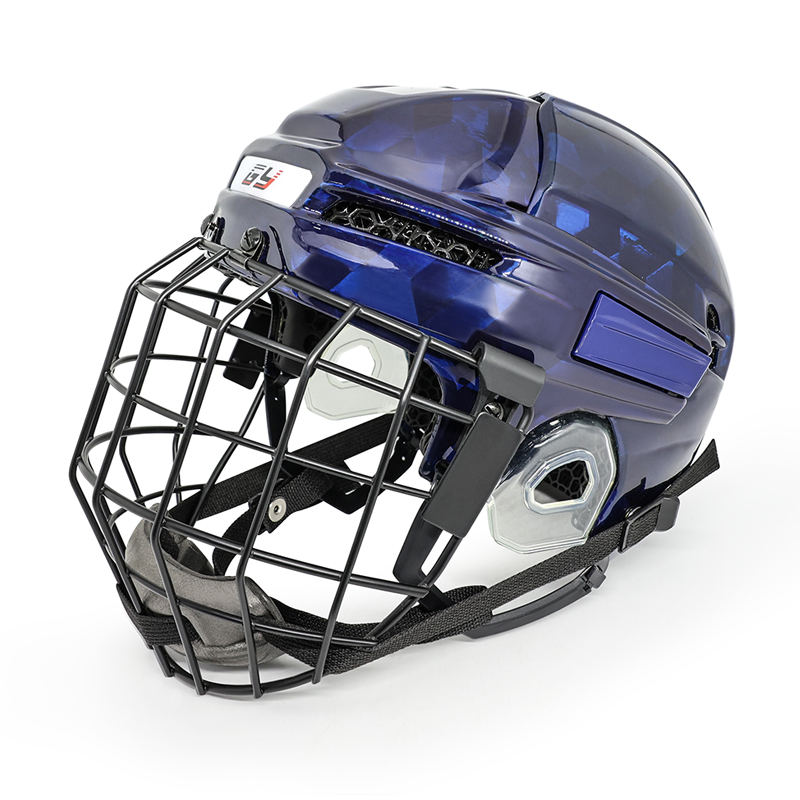
Legal league play across the globe requires baseline safety certifications. Look for visible stickers indicating HECC, CSA, or CE approval on the back of the shell. These regulatory bodies subject equipment to rigorous pass/fail testing. They drop heavily weighted forms onto steel anvils. They measure direct force transmission through the shell.
Pay exceptionally close attention to strict expiration dates. Certifications typically expire 6.5 years from the specific manufacturing date. Interior foams degrade significantly over time. Exterior plastics become dangerously brittle due to UV light exposure and constant temperature fluctuations in ice rinks. Because of this chemical degradation, buying used inventory carries immense safety risks. Never compromise your brain safety just to save a few dollars on second-hand marketplaces.
Baseline regulatory certifications only tell part of the story. The Virginia Tech STAR rating system provides vital, independent academic crash data. This specialized lab tests both rotational and linear acceleration. They simulate real-world hockey impacts from multiple angles and varying velocities. They then assign a star rating based entirely on concussion risk reduction.
Use this objective data framework to guide your purchasing decisions. You will quickly notice a fascinating industry trend. Some mid-priced helmets routinely outperform elite-priced models in raw safety metrics. Premium price tags often pay for lighter weight and advanced ventilation. They do not necessarily guarantee higher safety scores in academic laboratory testing.
We must establish a clear, trustworthy baseline regarding safety claims. No equipment fully prevents concussions. You must approach any marketing campaigns claiming absolute injury prevention with extreme skepticism.
High-quality designs mitigate severe focal impacts. They intelligently disperse rotational energy transfer away from the delicate brain tissue. They effectively reduce the severity of a sudden blow. They prevent catastrophic skull fractures. However, sudden deceleration still causes the brain to move violently inside the skull fluid. Understand these physiological limitations. Emphasize harm reduction and smart play over the false promise of absolute prevention.
Vinyl Nitrile remains a highly popular choice for many traditionalist hockey players. These dual-density foams offer excellent initial comfort and a classic fit profile.
Manufacturers introduced EPP to drastically improve high-speed impact absorption. It looks visually similar to high-grade bicycle or motorcycle foam.
Modern engineering introduced next-gen suspension systems to the premium market. Brands now utilize 3D-printed lattice structures and proprietary fluid pods. These advanced systems act exactly like automotive shock absorbers. They compress and shear laterally to handle dangerous rotational forces.
Buyers must assess whether the premium cost translates to proportionate real-world protective value. Independent testing data helps answer this difficult question. Sometimes, these advanced suspension pods dramatically improve safety scores. Other times, they merely add cost without beating traditional EPP foam structures. Try them on in person. Ensure the independent suspension system does not create unusual pressure points on your scalp.
| Liner Technology | Primary Material Profile | Impact Management Strength | Ideal User Profile |
|---|---|---|---|
| Vinyl Nitrile (VN) | Soft, dual-density foam | Low-to-medium linear impacts | Players prioritizing out-of-the-box comfort |
| Expanded Polypropylene (EPP) | Rigid, lightweight foam | High-energy catastrophic impacts | Competitive players needing weight reduction |
| 3D Pods / Suspension | Lattice or fluid-filled structures | Rotational and linear shear forces | Elite players seeking advanced force dispersal |
Facial protection is entirely non-negotiable. You must evaluate your options based on league rules, player age, and specific on-ice positions. Each style presents unique advantages and distinct trade-offs.
You must weigh these trade-offs carefully. Full cages prevent incredibly expensive dental work. Visors demand excellent anti-fog management protocols and carry significantly higher injury risks.
Mixing different brands is a common reality in locker rooms. You might want to pair a cage from one manufacturer with a shell from another. While generally possible, this practice requires strict attention to hardware detail.
We advise carefully weighing the purchase of pre-assembled "Combos" versus custom-building a unique setup. Combos include a shell and cage pre-installed by the factory. They offer excellent cost-efficiency. They guarantee proper J-clip alignment right out of the box. Custom setups let you mix specific fits. However, misaligned J-clips severely compromise your safety. A poorly fitted cage can drive upward violently into the chin during a collision. Always test the chin cup. It must sit firmly against the jawbone without restricting your ability to breathe or speak.
You must break down what buyers actually pay for as they move up the steep pricing tiers. It is rarely a linear increase in baseline safety.
At the entry-level price point, you get reliable, HECC-certified protection. The foams are heavier, and the ventilation channels remain basic. At the elite tier, you pay heavily for substantial weight reduction. You gain advanced ventilation exhaust ports to dump heat rapidly. You receive complex tool-less adjustments and proprietary rotational impact liners. Decide if those specific comfort features justify the premium markup. An appropriately sized entry-level ice hockey helmet with a 5-star lab rating often protects far better than a poorly fitting elite model.
Follow a highly structured approach to narrow down your final choices. We recommend this straightforward, logical process to guarantee success:
Evaluating your protective headgear requires completely ignoring aesthetic marketing campaigns. You must focus entirely on the precise intersection of independent lab data and personal fit. Your brain's safety depends heavily on structural integrity and anatomical matching, not flashy brand logos. We strongly recommend testing gear in a physical retail environment. If that remains impossible, buy from reputable online retailers offering generous return policies. Ensure the sizing is perfectly dialed in before you ever hit the ice.
A: Focus closely on the HECC expiration stickers, which are generally valid for 6.5 years. However, you must replace the unit immediately if you spot visible shell cracks or experience severe impacts. Inspect the interior foams regularly. Foam degradation, unexpected hardening, or missing padding severely compromises protective capabilities, necessitating an immediate upgrade.
A: No. A 5-star rating simply indicates superior performance in mitigating rotational and linear forces during specific lab tests. It reinforces harm reduction over absolute prevention. No current technology can stop the brain from moving inside the skull during rapid deceleration. Always play responsibly and keep your head up.
A: It is highly discouraged and often illegal in league play. Youth models feature different shell densities and impact ratings designed specifically for children's body weights. Adults generate significantly more kinetic force during collisions, requiring adult-rated structural integrity. Furthermore, adult leagues often have entirely different face mask compliance rules.
A: Standard size charts only account for total circumference, completely ignoring your specific head shape. Human heads generally skew toward round or oval profiles. Certain brands cater exclusively to one specific anatomical profile. If you experience intense side squeezing, you likely have a rounder head trying to fit into a narrow, oval-shaped shell.

