

- Home
- Products
- HOT
- Technology
- Service
- Resources
- About
- Contact
- All
- Product Name
- Product Keyword
- Product Model
- Product Summary
- Product Description
- Multi Field Search

Views: 0 Author: Site Editor Publish Time: 2026-06-26 Origin: Site


Field hockey goalies operate in a uniquely high-stakes environment. You regularly face dense plastic balls flying at speeds exceeding 90 mph. You also navigate unpredictable, aggressive stick swings inside the circle. Standing in the direct line of fire requires serious nerve. It also requires elite protective gear designed for these specific threats.
An effective field hockey goalie helmet must perfectly balance impact deflection, kinetic energy absorption, and optical clarity. This delicate balance is incredibly difficult to achieve. Extra layers of heavy protection often compromise your reaction time. Poorly designed cages can ruin your peripheral vision. We must approach this equipment evaluation realistically.
You should adopt a skeptical, evidence-based mindset while shopping. No headgear on the current market is entirely concussion-proof. Your ultimate goal is strategic risk mitigation. We achieve this through scientifically validated materials and a precise, individual fit. You will learn exactly how to evaluate, test, and select the safest head protection for your level of play.
Shell material dictates impact deflection; high-level play requires fiberglass or Kevlar blends over basic plastics.
Internal foam density (EPP vs. VN) determines how kinetic energy is dispersed before reaching the skull.
Cage configurations (cat-eye vs. straight bar) present a strict trade-off between peripheral vision and object penetration risk.
A poorly fitted top-tier helmet offers less protection than a perfectly fitted mid-tier helmet; specific fit-testing protocols are non-negotiable.
Verifiable safety certifications (CE, HECC, or CSA) are the baseline for any purchase decision.
We must define the specific business problem of goalie protection before evaluating products. The field hockey environment presents a unique matrix of physical threats. You do not just face direct ball strikes from penalty corners. You also face severe rotational forces from falling backward onto hard artificial turf. Accidental stick collisions during goal-mouth scrambles add another layer of blunt force trauma risk.
We measure the success of an impact resistant goalie helmet through three distinct criteria. First, we look at force distribution. The shell must spread localized kinetic energy across a wide surface area. Second, we evaluate structural integrity under repeated stress. A single game might subject your gear to dozens of minor impacts. Third, we analyze the weight-to-protection ratio. Heavy gear causes rapid neck fatigue, slowing down your reaction times.
Many novice players fall victim to the weight fallacy. You might assume a heavier mask automatically equals a safer mask. This assumption is dangerously incorrect. Modern material engineering matters far more than sheer physical mass. Advanced composite blends provide superior impact resistance while remaining incredibly light. Bulk does not stop concussions. Smart engineering stops concussions. You must prioritize scientific design over perceived heaviness.
The outermost layer acts as your primary line of defense. Shell construction directly dictates how successfully you deflect high-velocity strikes. Manufacturers generally divide these shells into two main categories: polycarbonate plastics and advanced composite blends. Your choice here depends entirely on your competitive level.
Polycarbonate/ABS: These injected plastics dominate the youth and entry-level club markets. They offer a lower price point. Polycarbonate flexes slightly upon impact. This flexing absorbs low-speed forces adequately. However, it fails catastrophically against elite-level drag flicks.
Fiberglass, Carbon Fiber, and Kevlar: Elite and collegiate play absolutely require these materials. Composite blends remain highly rigid under extreme stress. They do not flex inward toward your skull. Instead, they disperse kinetic energy across the entire shell structure. Kevlar layers actively prevent shattering during severe localized impacts.
You must also evaluate the backplate design carefully. Turn the gear around and examine the rear profile. Ensure the shell provides full occipital coverage. You frequently look down to track ground balls. This downward tilt exposes the sensitive base of your skull. A proper backplate drops low enough to protect the occipital bone entirely without restricting neck mobility.
We must highlight a critical implementation risk regarding composite shells. Never buy used composite headgear. Prior impacts often create invisible micro-fractures inside the fiberglass layers. These microscopic cracks destroy the structural integrity of the entire unit. The shell might look pristine on the outside while being structurally dead on the inside. You must purchase new equipment to guarantee peak protective performance.
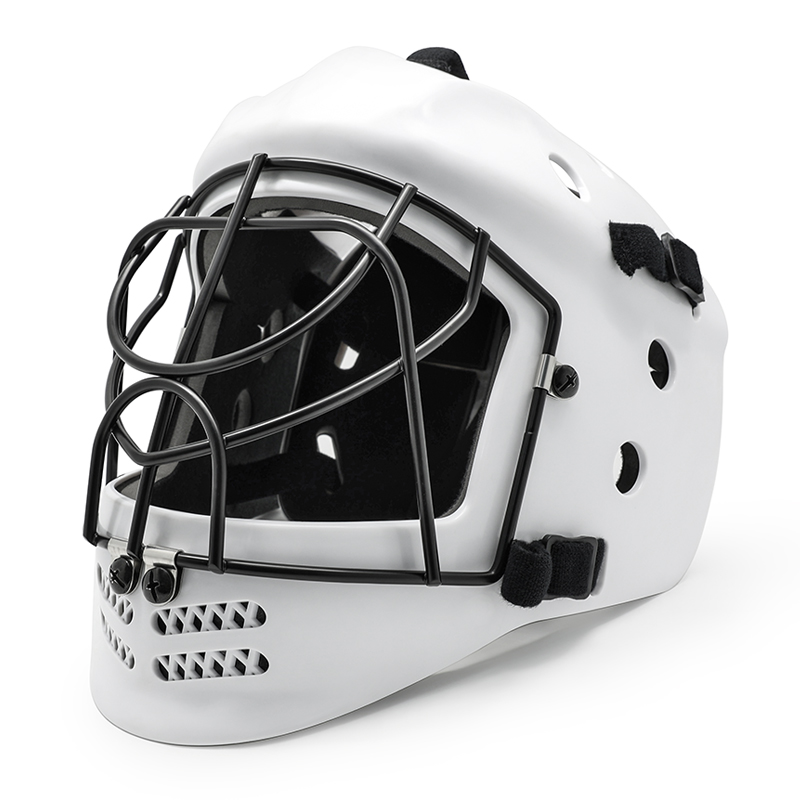
The hard outer shell only solves half the problem. Once the shell deflects the initial strike, kinetic energy travels inward. Internal padding systems exist to absorb and dampen this residual energy before it reaches your brain. Modern manufacturers utilize a sophisticated dual-density foam framework to accomplish this task.
Dual-density systems feature two distinct layers working in tandem. The outer layer sits flush against the shell. It uses highly rigid foam to absorb massive, blunt-force trauma. The inner layer touches your face and scalp. It uses much softer, pliable foam. This inner layer provides comfort, absorbs sweat, and ensures a secure, personalized fit. We can break down the primary materials used in these layers.
Foam Material | Density Profile | Primary Function & Performance |
|---|---|---|
Expanded Polypropylene (EPP) | Highly rigid and hard. | Handles massive, high-velocity impacts. It rarely compresses under light pressure. It requires a secondary comfort liner because it feels like styrofoam against the skin. |
Vinyl Nitrile (VN) | Softer and highly pliable. | Molds perfectly to individual head shapes. It handles repeated low-level impacts exceptionally well. It provides unmatched comfort but less extreme high-velocity protection. |
We cannot discuss internal systems without highlighting the chin cup and harness. Many players treat the chin strap as an afterthought. This is a massive mistake. The chin cup acts as a critical suspension system. It anchors the entire protective unit to your facial structure. If you take a direct frontal strike, a loose chin cup allows your jaw to slam violently into the front cage. You must secure this harness tightly to engage the suspension properties.
Goalies constantly battle the trade-off between seeing the ball clearly and keeping it out of their face. Cage configurations sit at the very center of this conflict. Manufacturers offer two distinct solution categories. You must choose between straight bar grids and cat-eye designs.
Straight Bar / Grid Cages: These cages offer maximum structural integrity. They feature simple horizontal and vertical intersecting lines. You face zero risk of stick or ball penetration here. The trade-off is a minor visual obstruction. The bars can momentarily block your sightline as you track an aerial pass.
Cat-Eye Cages: These feature distinct, eye-shaped openings. They maximize both peripheral and downward vision. Tracking ground balls becomes significantly easier. Note a crucial warning here. You must ensure the eye-holes follow strict regulatory sizing. Oversized cat-eye openings allow the curved edge of a field hockey ball to penetrate and strike the orbital bone.
Material quality drastically impacts cage performance. Stainless steel dominates the mid-tier market. It is highly durable and affordable. However, steel adds considerable weight to the front of your face. Titanium offers a premium alternative. Titanium cages weigh roughly half as much as stainless steel. This massive weight reduction eliminates late-game neck fatigue. Titanium carries a premium price tag, but elite players consider it a mandatory investment.
Apply an evidence-oriented check before purchasing. Advise buyers to verify the cage design specifically targets field hockey. Many players mistakenly buy ice hockey gear. Ice hockey pucks are flat discs. Field hockey balls are smaller, dense spheres. A cage designed to stop a flat puck might easily allow a round ball to pass through the gaps. Ball and puck impact dynamics differ entirely. Verify sport-specific compliance.
Brand marketing frequently exaggerates safety claims. You must bypass the marketing copy and look directly at compliance and authoritativeness. Regulatory stamps provide the baseline for trust. Look for the CE marking in Europe. Look for HECC or CSA certifications for North American cross-overs. These laboratories do not care about aesthetics. They subject equipment to brutal, standardized drop tests and high-velocity projectile impacts. They measure exactly how much G-force transfers to a synthetic brain model.
Even a HECC-certified Kevlar shell becomes dangerous if it fits poorly. A sloppy fit magnifies rotational forces during a fall. You must perform the rigorous 4-Point Fit Test upon receiving your gear. This implementation protocol is completely non-negotiable.
Crown check: Place the unit on your head. The top padding should sit flush against your crown. The weight must distribute evenly. It should never rest solely on your forehead.
Temple pressure: The side padding must grab your temples firmly. You want a snug grip, but it should not cause immediate headaches. Check for lateral shifting. The shell should not rotate horizontally when you shake your head.
Chin alignment: Seat your chin securely in the cup. Open and close your mouth. You should be able to shout commands to your defenders without the cup shifting off your chin. It must operate independently of normal jaw movement.
Shake test: Grab the facemask and move it gently up and down. The skin on your forehead should move synchronously with the internal padding. If the padding slides across your skin, the fit is too loose.
We must address a prevalent risk mitigation issue in youth sports. Parents often buy a "size up" so their young goalie can grow into the equipment over several seasons. This practice is inherently dangerous. Safety is compromised instantly with an oversized fit. An oversized shell acts like a bobblehead during a collision, amplifying whiplash effects. Always buy the size that fits perfectly today.
Selecting the right product requires matching your budget to your actual play level. Overspending on youth gear offers no practical benefit. Underspending on collegiate gear invites severe injury. Use this standardized matrix to guide your shortlisting logic.
Play Level | Budget Range | Core Feature Focus |
|---|---|---|
Youth / Beginner | $100 – $200 | Focus strictly on proper sizing. Prioritize basic CE certification. Lightweight polycarbonate shells work perfectly for slower ball speeds. Avoid heavy steel cages to protect developing neck muscles. |
High School / Club | $200 – $400 | Upgrade to basic composite materials. Demand dual-density VN/EPP foam systems. Stainless steel cages become mandatory as drag flick speeds increase. Ensure the backplate offers full coverage. |
Elite / Collegiate | $400+ | Demand rigid carbon fiber or Kevlar shells. Invest in titanium cages to minimize fatigue. Expect custom-fit foam liners that lock the jaw and crown firmly in place during aggressive diving. |
Vendor selection matters just as much as brand selection. Recommend buying exclusively from specialized field hockey retailers. Big-box sporting goods stores rarely stock niche goalie sizes. More importantly, specialized retailers offer generous return policies. These policies allow you to perform the 4-Point Fit Test in your living room. If the temple pressure feels wrong, you must be able to return the product without penalty. Never finalize a purchase without an at-home fit test.
Evaluating your head protection requires ruthless objectivity. You must look far past aggressive aesthetics, custom paint jobs, and flashy brand hype. The physics of turf impacts do not care about how intimidating your gear looks. The turf only respects material engineering and precise sizing.
Your final action steps are clear and straightforward. Prioritize a verifiable, millimeter-perfect fit over any other metric. Invest in advanced composite materials the moment you face high school varsity shot speeds. Conduct the 4-point fit test personally before stepping onto the pitch. Treat your chin strap as a vital suspension tool, not an accessory. By enforcing these strict standards, you secure the confidence needed to dominate the circle safely.
A: You should replace your headgear every 3 to 5 years under normal playing conditions. Internal foams degrade over time from sweat acidity and constant compression. The plastics also become brittle from UV exposure. However, you must replace the entire unit immediately after any severe, shell-compromising impact, regardless of its age.
A: Yes, but it requires specific planning. You need a wider shell profile to accommodate the frames safely. Some premium models feature specialized foam cutouts at the temples specifically for glasses. If your frames press painfully against your temples, consider switching to low-profile sports goggles or daily contact lenses for game days.
A: Generally, no. Ice hockey cages are engineered to stop thick, flat pucks. Field hockey uses smaller, dense, spherical balls. A round ball can penetrate specific ice hockey cage gaps, especially cat-eye designs, causing severe facial trauma. You should avoid cross-use completely unless the specific model carries multi-sport safety certifications.
A: Wipe down the internal foam with a damp cloth and mild, non-abrasive soap after every heavy session. Never use harsh chemical solvents or bleach; these destroy the foam's cellular structure. Always let the padding air dry in a well-ventilated space. Never expose the foams to direct heat sources like hair dryers or radiators.


