

- Home
- Products
- HOT
- Technology
- Service
- Resources
- About
- Contact
- All
- Product Name
- Product Keyword
- Product Model
- Product Summary
- Product Description
- Multi Field Search

Views: 0 Author: Site Editor Publish Time: 2026-06-25 Origin: Site


You gear up for a crucial practice session. A teammate asks if you can wear a standard ice hockey mask on the turf. Can a goalkeeper safely use an ice hockey helmet for field hockey, or vice versa? This common crossover question carries significant safety risks. The impact dynamics between the two sports differ drastically. Ice hockey involves flat vulcanized rubber pucks and heavy player collisions. Field hockey relies on a highly dense, spherical ball flying at extreme velocities. Furthermore, official leagues enforce strict compliance rules to prevent serious injuries. You need a transparent, evidence-based framework to make the right choice. We will guide goalkeepers, parents, and program directors through this process. You will learn how to select the correct head protection based on safety standards. We will also cover essential details regarding fit, visibility, and real-world performance needs.
A field hockey ball features dimpled or smooth plastic. It covers a highly dense cork or rubber core. It functions like a localized missile during a match. The typical velocity easily exceeds 70 mph during penalty corners. Conversely, an ice hockey puck uses vulcanized rubber. It slides flat across slick ice. The puck spreads kinetic force entirely differently upon impact. Shells must react to these specific projectile shapes. You cannot ignore this fundamental difference. The density of a turf ball punishes materials in a highly concentrated manner.
Ice hockey shells absorb blunt, flat impacts. They also protect you during secondary physical collisions. Your head might hit the ice hard. Another player might crash into you near the crease. Ice masks account for these broad trauma events. Field hockey shells do a different job entirely. They must dissipate concentrated, spherical impacts. These hits aggressively test specific structural areas. The forehead and chin sections take immense stress. A spherical ball focuses energy into a tiny central point. A flat puck distributes energy across a much wider surface area.
Biomechanical testing relies on strict drop-test metrics. Standardized projectile tests evaluate severe concussion risks. They measure exact shell fracture thresholds. Ice hockey testing expects flat weight distributions. Engineers test for sliding impacts and broad force trauma. Field hockey testing drops heavy spherical weights. This specifically measures localized shell stress. Laboratories ensure the outer shell will not puncture or crack. The kinetic energy must transfer safely into the internal foams. You rely on these scientific baselines for survival on the pitch. Swapping helmets compromises these engineered tolerances.
Shell construction varies wildly between the two sports. Ice hockey manufacturers often utilize heavy-duty polycarbonate. Some elite models use advanced carbon-kevlar blends. These materials offer extreme cold-weather impact resistance. Freezing temperatures make plastics brittle. Ice shells counteract this environmental factor. Field hockey requires a completely different approach. Brands utilize lightweight fiberglass, carbon fiber, or high-impact molded plastics. These specific materials excel at heat dissipation. They also boost your agility during fast turf play. You stay mobile because the shell sheds unnecessary bulk.
Grid spacing serves as a critical safety barrier. Standard ice hockey cat-eye cages are usually illegal in field hockey. They remain highly dangerous on the turf. A standard field hockey ball can wedge into these wide gaps. Worse, it can pass right through them and strike your face. Therefore, you need reinforced, closely knit straight-bar designs. A proper goalie helmet cage must guarantee zero ball penetration. Some brands offer modified field-hockey-specific cat-eye cages. These use tighter wire placements to ensure safety. Wire thickness also matters greatly. Field hockey cages use heavy-gauge steel to resist denting from heavy spherical impacts.
Internal padding systems show massive differences. You will notice dual-density foam configurations in both styles. However, field hockey requires sweat-resistant, breathable foams. Turf heat gets intensely hot during summer tournaments. You need foams made from Expanded Polypropylene (EPP) or similar closed-cell materials. They do not absorb moisture quickly. Ice hockey focuses on high-density cold-resistant foams. Vinyl Nitrile (VN) foam appears frequently in ice masks. These foams trap heat to keep the player warm. Wearing ice foams on a summer turf field leads to miserable playing conditions.
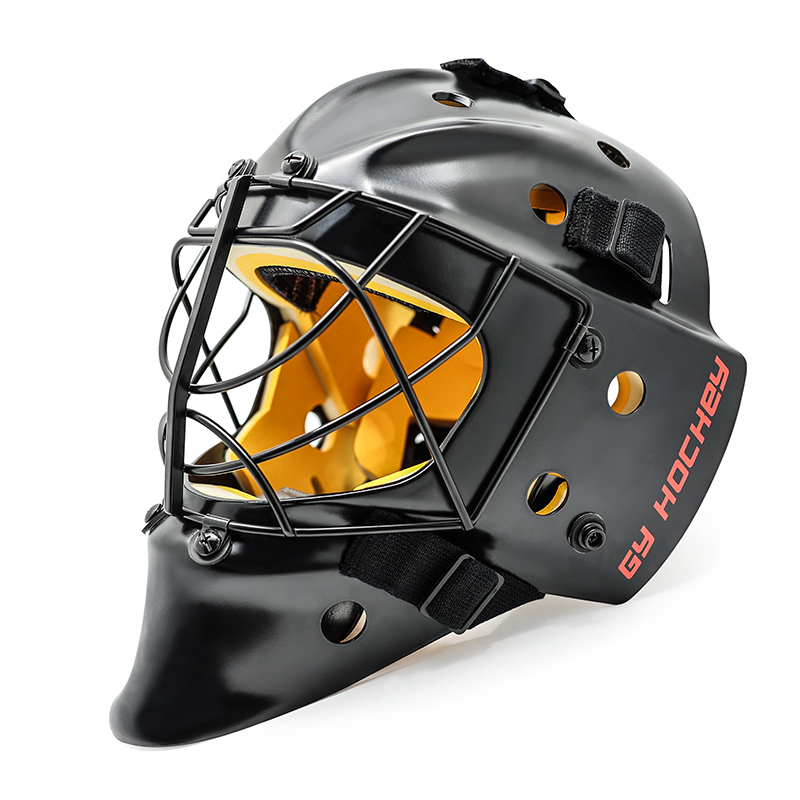
Referees rigorously check your equipment before matches. Ice hockey helmets carry specific HECC or CSA certification stickers. These labels certify protection against ice-specific hazards. Referees will look for these exact stickers on the back plate. HECC stickers even carry expiration dates. The internal foams degrade over time. Once the sticker expires, you cannot use it in an official ice hockey game. These standards ensure players survive high-speed puck impacts and dangerous board collisions.
Field hockey operates under a different regulatory landscape. You need CE certification or specific FIH guidelines. A properly certified field hockey goalie helmet ensures maximum safety. Wearing a non-certified hybrid is extremely risky. Heavily modified ice hockey helmets may void your team insurance policies. Umpires will likely bench you immediately if they spot illegal equipment. The FIH updates equipment mandates regularly. You must check their official handbook. A certified turf helmet proves it passed strict spherical impact testing protocols.
Always practice strict risk management. Be very skeptical of generalized "multi-sport" claims. Safety data strongly discourages wearing mixed gear.
Downward vision represents a major user-reported pain point. Field hockey goalies must track the ball directly at their feet. Ground clearances matter heavily during scrambles in the circle. Traditional ice hockey masks feature extended chin cups. These large chin profiles completely block your downward angle. You simply cannot see your kickers clearly. Field hockey helmets use a sculpted, slim chin profile. This design lets you tuck your chin and watch the ball hit your pads. Better downward vision directly improves your save percentage.
Ventilation prevents serious heat exhaustion. Field hockey happens in warm weather. You play on heat-radiating artificial turf. Surface temperatures often exceed ambient air temperatures. Helmets incorporate larger rear exhaust vents. They also feature advanced moisture-wicking liners. Heavily insulated ice hockey helmets trap your body heat. Ice rinks stay around 50 to 60 degrees. Turf fields can hit 100 degrees. Wearing an ice mask causes rapid overheating on sunny days. Superior airflow keeps your core temperature stable during intense penalty corners.
Weight directly impacts your agility in the crease. You must analyze the trade-off between absolute protection and neck fatigue. Ice hockey shells feel incredibly heavy over a long period. A 60-minute field hockey match demands constant, rapid head movement. You must scan the field continuously. Heavy shells slow your reaction times significantly. They also strain your neck muscles. Lightweight fiberglass turf helmets reduce this burden. You remain explosive and agile late in the fourth quarter.
You must define your exact play level first. Youth and beginner players should prioritize adjustable sizing. Look for lightweight polycarbonate shells and maximum field of vision. Younger players need a wide viewing angle to learn the game. Varsity and collegiate players require CE-certified fiberglass or carbon-fiber models. These must feature sport-specific cages. Elite players often evaluate custom-molded options. Bespoke fits provide perfect foam-to-skull contact. Proper contact ensures optimal energy transfer during high-velocity impacts.
Many players ask about the "Can I Convert?" rule. They want to swap cages on an old ice hockey shell. We strongly advise against this unsafe practice. You face strict compatibility risks. Doing this instantly voids manufacturer warranties. Furthermore, the shell's chin and forehead contours rarely match perfectly. They will not mate properly with a turf-specific cage. Forced screws create micro-fractures in the polycarbonate. These fractures shatter upon impact. Buy a dedicated helmet instead of risking a dangerous conversion.
Use this simple evaluation checklist before stepping onto the pitch. Keep these rules in mind when trying on new gear.
| Feature | Ice Hockey Helmet | Field Hockey Helmet |
|---|---|---|
| Primary Shell Material | Heavy Polycarbonate / Carbon-Kevlar | Lightweight Fiberglass / Carbon Fiber |
| Cage Design | Wide Cat-Eye or Standard Grid | Tight Straight-Bar or Modified Cat-Eye |
| Foam Type | Cold-resistant VN (Heat Trapping) | Sweat-resistant EPP (Breathable) |
| Vision Priority | Elevated Puck Tracking | Downward Ground Ball Tracking |
| Certification Standard | HECC / CSA | CE / FIH Guidelines |
In conclusion, these helmets might look visually similar from a distance. However, they are entirely non-interchangeable for serious play. The underlying engineering varies completely. The impact dynamics of a dense ball dictate specialized material science. Cage specifications and regulatory standards demand sport-specific designs. Do not cross-contaminate your protective gear. Your next steps are simple. Consult official manufacturer sizing charts today. Measure your head circumference accurately. Finally, browse certified field hockey helmets from reputable retailers to ensure maximum protection. Making the right choice keeps you safe, compliant, and ready to dominate the crease.
A: No. You cannot use an ice hockey helmet for official field hockey play. Standard ice hockey cages feature wide gaps. A field hockey ball can easily pass through them, causing severe facial injuries. Furthermore, league rules strictly prohibit uncertified equipment. Using one will void insurance and get you benched immediately.
A: A straight-bar cage uses a tight grid layout. It strictly prevents ball penetration while offering standard visibility. A cat-eye cage features curved bars for enhanced eye-level sightlines. However, traditional ice cat-eye cages are illegal in field hockey. You must use modified, sport-specific cat-eye designs to meet strict regulations.
A: Most field hockey goalie helmets last between three to five years. Internal foams naturally compress over time. Sweat and UV exposure degrade the materials. Fiberglass shells also lose structural integrity after repeated high-velocity impacts. Always check manufacturer guidelines. Replace your gear immediately if you notice deep shell cracks.

