

- Home
- Products
- HOT
- Technology
- Service
- Resources
- About
- Contact
- All
- Product Name
- Product Keyword
- Product Model
- Product Summary
- Product Description
- Multi Field Search

Views: 0 Author: Site Editor Publish Time: 2026-06-28 Origin: Site


Defending a penalty corner requires incredible bravery. You face drag flicks traveling at highway speeds while holding your ground in the shooting circle. Balancing crucial facial protection against athletic performance during these high-risk plays is absolutely vital.
Awareness of severe impact injuries in modern field hockey continues to rise among players and coaches. Simultaneously, international sporting bodies enforce strict regulations governing protective gear to keep the game fair and fluid. Navigating these rules while finding reliable safety equipment often frustrates many defensive players. You need protection, but you also need to see the ball clearly.
We provide an evidence-based framework for evaluating and selecting your ideal defensive gear. You will learn how to size and fit equipment perfectly without compromising your peripheral visibility. This guide ensures you choose the right field hockey face mask to stay safe, confident, and entirely rule-compliant on the pitch.
Face masks are highly regulated by the FIH (International Hockey Federation) and are primarily restricted to defending penalty corners.
Material selection dictates the trade-off between peripheral vision (polycarbonate) and ventilation (wire cages).
High-density interior cushioning and quick-release strap systems are non-negotiable for rapid transitions during gameplay.
Proper sizing prevents dangerous mask-shifting during high-velocity impacts.
You cannot simply step onto the field wearing full facial protection whenever you prefer. The International Hockey Federation (FIH) heavily regulates protective equipment. Local leagues, the NCAA, and the NFHS generally align their rulebooks closely with FIH standards. These frameworks ensure safety gear does not endanger opposing players or provide an unfair competitive advantage. Understanding these compliance rules is your first step before making a purchase.
The primary use case for a hockey face mask occurs during penalty corners. Rulebooks explicitly permit defenders to wear masks to protect against high-velocity drag flicks. However, this permission is strictly temporary. Defenders must remove the mask immediately once the ball travels outside the 23-meter area. You cannot continue playing in open field conditions while wearing it. Referees will penalize players who fail to discard their protective gear promptly after the penalty corner phase ends.
Players rarely wear masks during open play. Referees only grant exceptions under strict medical parameters. For instance, if you are recovering from a broken nose or a recent facial fracture, you might receive permission. You must typically provide specific medical clearance documentation to the match officials beforehand. Furthermore, masks worn for medical reasons must meet stringent design criteria. They must feature smooth contours and lack any sharp protrusions. Opponents must remain entirely safe during accidental collisions.
Aesthetics take a back seat to safety and visibility in field hockey. Most governing bodies enforce strict color regulations for protective gear. Masks must generally be transparent, completely smooth, or a single solid color. White and black remain the most universally accepted solid colors. Flashy patterns, reflective mirrored tints, and multi-colored designs frequently violate league rules. Always consult your specific league handbook regarding color restrictions before finalizing your selection.
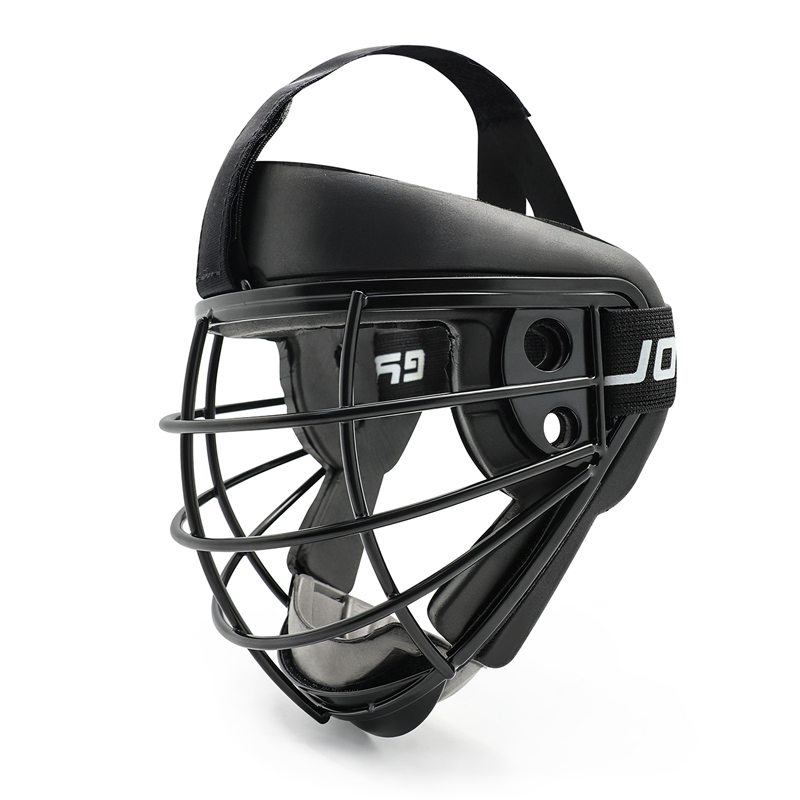
Evaluating protective gear requires looking past marketing terminology. You must understand how specific materials and designs perform under extreme physical stress. A premium mask must absorb kinetic energy, maintain your visual awareness, and stay securely anchored to your head.
The outer shell serves as your primary defense line. Manufacturers generally utilize two distinct materials: high-impact polycarbonate and high-tensile steel alloy wire. Polycarbonate utilizes shatter-resistant plastic to create a continuous physical barrier across your face. It excels at dispersing blunt force across a wide surface area. Conversely, wire cages use welded steel or titanium alloys to block the ball. The structural integrity of both materials must handle dense, high-speed hockey balls. The ultimate outcome is preventing catastrophic orbital bone injuries and severe dental fractures.
You cannot defend effectively if you cannot track the ball. Different mask structures impact your peripheral tracking in distinct ways. Transparent polycarbonate shields offer an unobstructed view of the field. However, they sometimes introduce minor visual distortion near the curved edges. They can also reflect stadium lighting, causing sudden glare. Wire cages eliminate glare entirely. They create a slight visual obstruction due to the grid bars, but they offer incredibly consistent depth perception. Your brain quickly learns to "look past" the bars after a few practice sessions.
A rigid outer shell means nothing without high-quality internal padding. The mask must absorb the shock, not transfer it directly to your forehead or chin. Most elite masks utilize dual-density EVA foam. The outer foam layer feels firm to absorb high-velocity impact energy. The inner foam layer feels soft to contour comfortably against your skin.
We must set a realistic expectation regarding head injuries. Masks effectively prevent facial lacerations, broken noses, and shattered teeth. However, no mask entirely eliminates concussion risks. The rotational forces transferred to your brain during a heavy impact can still cause concussions. Your gear is a crucial safeguard, but it is not a magical forcefield.
Material Outcomes Table | ||
Feature Focus | Polycarbonate Shield | Wire/Steel Cage |
|---|---|---|
Impact Absorption | Disperses force across the entire plastic surface | Absorbs force into the rigid metal frame |
Visual Tracking | Unobstructed central vision, potential edge distortion | Minor bar obstruction, excellent depth perception |
Concussion Risk | Mitigates direct trauma, does not stop brain movement | Mitigates direct trauma, does not stop brain movement |
Laboratory testing rarely reflects the chaotic reality of a muddy, freezing pitch. Real-world implementation involves managing sweat, sudden temperature changes, and rapid game transitions. You must address these practical elements to maximize your defensive performance.
Players frequently complain about clear polycarbonate masks trapping breath and radiating body heat. During cold evening matches, the temperature difference between your face and the outside air causes rapid condensation. This fog ruins your visibility instantly. Manufacturers combat this by adding strategically placed ventilation holes near the mouth and nose. You can also proactively apply specialized anti-fog sprays before each half.
Apply anti-fog solutions exactly 30 minutes before warm-ups.
Buff the interior plastic gently using a microfiber cloth.
Avoid touching the interior shield surface during the match.
Penalty corners end quickly. The moment your team clears the ball past the 23-meter line, you must transition into an attacker. Defenders must pull the mask off in under a second and toss it safely off the pitch. They do this while continuing to run at full sprint. Strap design determines how smoothly this happens.
Manufacturers typically use adjustable elastic bands or wide Velcro straps. Elastic provides a consistent stretch, allowing you to pull the mask over your head in one fluid motion. Velcro requires tearing the strap open blindly. Most elite defenders prefer high-stretch elastic systems for their seamless removal speed.
You face a delicate tension balance. Straps must remain tight enough to prevent the mask from shifting upon impact. A loose mask can drive the plastic edges into your eyes or nose during a collision. However, the straps must stay loose enough for instant, one-handed removal. Finding this sweet spot requires adjusting your straps meticulously during practice sessions, not right before a crucial game.
Secure the top strap around the crown of your head first.
Adjust the lower straps until the chin cup rests firmly.
Shake your head vigorously; the mask should not rattle.
Practice ripping it off single-handedly while jogging.
The market primarily divides equipment into distinct categories based on materials and age groups. Understanding the pros and cons of these categories helps narrow your shortlist quickly.
Transparent plastic models remain highly popular among modern defenders. They look sleek and provide comprehensive coverage.
Pros: They offer maximum surface protection against stray sticks. They provide clear sightlines. They are highly FIH-compliant for most open-play medical exemptions.
Cons: They suffer from extreme heat retention during summer tournaments. They are prone to scratching if tossed onto gravel tracks. They carry a high risk of fogging in winter.
Cage models borrow heavily from ice hockey and lacrosse designs. They prioritize rugged durability and airflow.
Pros: They deliver superior airflow and breathability. They carry zero fogging risk regardless of the weather. They boast exceptionally high durability and resist scratches.
Cons: They feel slightly heavier on the neck. The structural grid bars can initially distract the wearer's focus until they acclimate.
Never purchase an adult model for a junior player simply hoping they will "grow into it." Youth models prioritize lighter total weights to protect developing neck muscles. They feature adjusted chin-to-forehead ratios tailored for smaller facial structures. Adult models utilize thicker materials focused entirely on managing maximum-velocity drag flicks from seasoned professionals. Wearing the wrong age category compromises both comfort and safety.
Category Selection Chart | ||
Player Priority | Recommended Style | Primary Reason |
|---|---|---|
Maximum Airflow | Wire/Steel Cage | Zero fogging risk in high humidity |
Unobstructed Vision | Polycarbonate Shield | No metal bars blocking peripheral tracking |
Medical Exemption | Polycarbonate Shield | Complies with FIH smooth-surface mandates |
Junior Defenders | Youth Specific Model | Lighter weight protects juvenile neck muscles |
Purchasing top-tier equipment represents an investment in your safety. However, poor sizing renders the best materials useless. Furthermore, improper maintenance degrades protective foam rapidly, leaving you vulnerable during critical impacts.
You cannot guess your size based on your helmet size in other sports. Field hockey gear requires precise facial measurements. Grab a soft measuring tape and follow a standard sizing framework.
Measure your facial width horizontally from ear to ear across your cheekbones.
Measure your facial length vertically from the center of your forehead down to the bottom of your chin.
Cross-reference these two numbers with the manufacturer's specific sizing chart.
Every brand uses slightly different molds. A medium in one brand might fit like a large in another. Always trust the tape measure over brand assumptions.
Detailing the lifespan of your gear ensures you know exactly when to replace it. The outer polycarbonate or steel shell rarely breaks during normal play. However, the internal components fail much faster. Foam inserts degrade continually from acidic sweat, bacteria, and UV exposure. Over time, the dual-density EVA foam hardens and cracks. When the foam loses its elasticity, it stops absorbing shock. You should rigorously inspect the interior foam at the start of every season. If you press the foam and it does not spring back immediately, you must replace the entire unit.
Proper cleaning maintains your visibility and prevents severe skin breakouts on your chin and forehead. You must adopt safe cleaning methods.
For clear plastics, absolutely avoid abrasive materials like paper towels or coarse sponges. They create micro-scratches that ruin visibility under stadium lights. Use lukewarm water, mild dish soap, and a clean microfiber towel. Gently wipe the surface and let it air dry completely.
Sanitizing the foam requires a different approach. Spray the interior foam with an antibacterial sports equipment deodorizer after every match. Never throw your gear into a washing machine or dryer. The extreme heat will melt the glue holding the foam to the shell. Store your equipment in a well-ventilated bag, separate from wet cleats or damp shin guards.
Selecting reliable defensive gear requires a clear strategy. First, prioritize your specific league compliance rules, ensuring you meet all color and material regulations. Next, balance the fundamental choice between a clear polycarbonate shield and a steel wire cage. Base this decision strictly on your personal tolerance for fogging versus visual gridlines.
Remember that superior impact resistance means nothing if the straps hinder your ability to toss the gear away quickly during a counterattack. Your most actionable next step is simple. Grab a soft measuring tape, record your precise facial dimensions, and cross-reference them with specific brand sizing charts from trusted manufacturers before finalizing any purchase.
A: No. FIH rules strictly prohibit wearing masks during open play. You may only wear them while defending penalty corners. The only exception involves securing a formal medical exemption from match officials due to a specific facial injury, like a healing broken nose.
A: Goggles primarily protect the eyes and are mandatory for field players in many US high school leagues (NFHS). A full mask covers the entire face, including the chin and forehead. Teams purchase full masks exclusively for defending high-impact penalty corners.
A: Apply a dedicated anti-fog sports spray to the interior plastic 30 minutes before your match. Buff it gently with a microfiber cloth. Additionally, ensure you do not pull the lower strap too tight, allowing exhaled breath to escape downward.
A: Generally, no. Attackers do not stand in the direct firing line of a penalty corner drag flick. Teams purchase these protective items almost exclusively for the four defensive players and the goalie defending the circle during short corners.


