

- Home
- Products
- HOT
- Technology
- Service
- Resources
- About
- Contact
- All
- Product Name
- Product Keyword
- Product Model
- Product Summary
- Product Description
- Multi Field Search

Views: 0 Author: Site Editor Publish Time: 2026-08-02 Origin: Site


High-velocity impacts, unpredictable collisions, and freezing arena temperatures demand precise material engineering in protective gear. Buyers often struggle to separate marketing jargon from the actual material science that dictates impact protection, heat dissipation, and helmet longevity. Equipment managers, parents, and elite players need clear facts to make safe choices rather than relying on brand hype. Understanding the specific polymers, foams, and advanced composites used in modern head protection is the only way to objectively evaluate safety ratings. This knowledge helps justify gear selection and ensures you choose an ice hockey helmet that meets specific performance and compliance standards. When you step onto the ice, the structural integrity of your equipment is the only barrier between a routine play and a severe injury. We will break down exactly what goes into these helmets, how the materials function under stress, and what you need to look for before outfitting yourself or your team.
Historical Evolution: The transition from raw leather and heavy fiberglass to modern injection-molded polymers has fundamentally redefined player safety and energy management.
Shell Durability: Most modern outer shells rely on High-Density Polyethylene (HDPE) or Polycarbonate to provide a lightweight, shatter-resistant barrier against localized impacts (pucks, sticks).
Energy Absorption: Internal liners dictate energy management, with manufacturers forcing a choice between the soft, custom-molding feel of Vinyl Nitrile (VN) and the rigid, ultra-lightweight protection of Expanded Polypropylene (EPP).
Next-Generation Customization: The emergence of the carbon fiber 3D printed ice hockey helmet is shifting the market from mass-produced foams to bespoke, 3D-scanned lattice-structured impact dispersion.
Material Lifespan: Helmet materials degrade over time due to sweat, UV exposure, and repeated impacts, making HECC and CSA certification expiration dates a non-negotiable purchasing metric.
Modern helmets perform two distinct jobs during a collision. The rigid outer shell deflects sharp, localized forces from pucks and sticks. It spreads the initial kinetic energy across a wider surface area. The internal liner then compresses to slow the deceleration of the skull. You must evaluate both components together. A strong shell is useless if the liner fails to absorb the remaining force. When a player takes a slapshot to the head, the shell prevents skull fracture by stopping the puck from penetrating. The liner prevents concussive force by acting as a crumple zone. Understanding this two-stage process is critical for evaluating any piece of head protection.
Equipment managers often see helmets where the shell is intact, but the internal foam is permanently compressed. This means the helmet has lost its ability to absorb energy. You cannot judge a helmet's safety purely by looking at the shiny plastic exterior. You have to press into the foam, check its rebound rate, and ensure the adhesive holding it to the shell remains intact. If the foam feels rock hard or crumbles under pressure, the helmet is dead, regardless of how good the outside looks.
Early head protection relied on vintage leather and wood-based composites. These materials offered minimal impact resistance and absorbed massive amounts of sweat, making them heavy and unsanitary. Manufacturers eventually shifted to early fiberglass designs. While fiberglass offered better puncture resistance, it was heavy and prone to shattering under extreme cold. Today, advanced polymers dominate the industry. This historical shift directly shaped modern testing standards. Current materials provide superior energy management without adding unnecessary weight.
The transition to plastics like HDPE revolutionized the game. It allowed for mass production of standardized shapes that could withstand the unique environmental challenges of an ice rink. Cold temperatures make materials brittle. A helmet that survives a hammer strike at room temperature might shatter like glass at zero degrees. Modern polymers are specifically engineered to maintain their flexibility and impact resistance even in freezing conditions.
Direct impacts are dangerous, but glancing blows often cause traumatic brain injuries. Modern materials must address these rotational forces. Advanced liners allow slight movement between the shell and the head. This shearing action redirects rotational energy away from the brain. Evaluating this specific material capability is critical for player safety. When a player is checked into the boards at an angle, their head wants to spin. If the helmet is locked rigidly to the skull, that rotational force transfers directly to the brain tissue.
Engineers now incorporate slip planes and multi-density foams that shear upon impact. This means the outer shell might rotate a few millimeters while the inner liner stays gripped to the head. This tiny fraction of movement absorbs a massive amount of rotational energy. When evaluating helmets, look for independent suspension systems or layered foams designed specifically to address off-axis impacts.
Heavy helmets increase neck strain and player fatigue. Dense foams trap heat against the scalp. Highly ventilated, lightweight composites solve these physiological trade-offs. However, adding ventilation ports can weaken the shell structure. You must balance the need for cooling with the demand for structural integrity. A player who is overheating will suffer from reduced cognitive function and slower reaction times, which ironically increases their risk of injury.
Manufacturers use thermal imaging to map heat zones on the head and place vents accordingly. However, every hole cut into the plastic shell reduces its overall strength. Engineers must thicken the plastic around the vents or use stronger materials like polycarbonate to compensate. This is why high-end helmets with massive ventilation ports often use different shell materials than entry-level helmets with fewer vents.
Baseline requirements for HECC and CSA approvals dictate helmet safety. Material testing directly influences these ratings. Laboratories subject helmets to extreme temperatures and repeated impacts. The materials must not crack, shatter, or compress permanently. Always verify these certifications before making a purchase. The testing protocols are brutal. Helmets are frozen, heated, and dropped onto steel anvils from various heights.
If a helmet passes these tests, it receives a certification sticker with a strict expiration date. This date is usually 6.5 years from the date of manufacture. This is not a suggestion; it is a hard deadline based on the known degradation rates of the plastics and foams used in construction. Using an expired helmet voids insurance policies and puts the player at severe risk.
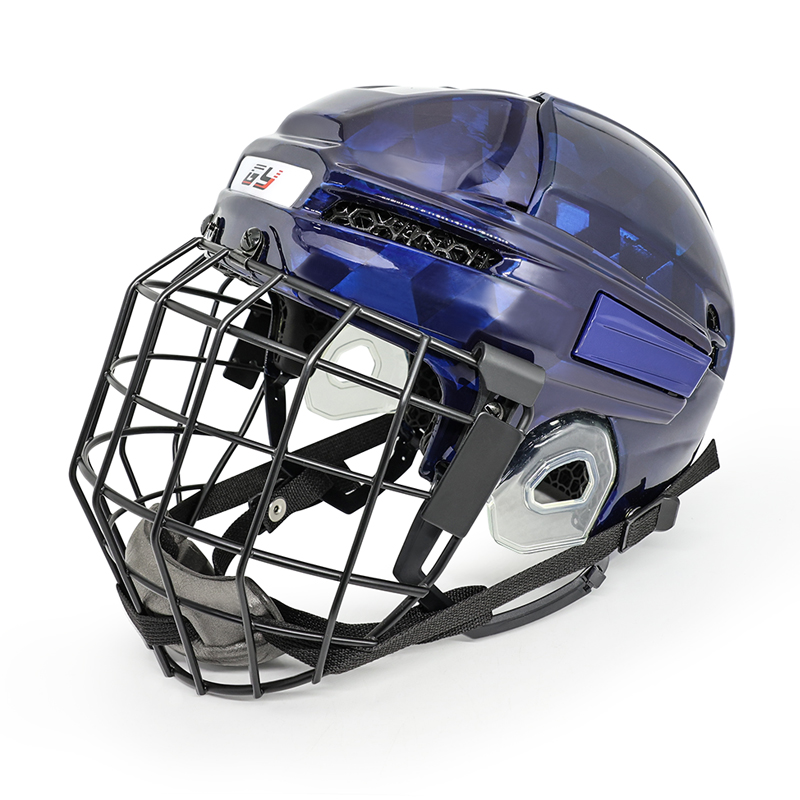
HDPE is a flexible and highly durable polymer. It resists cracking in sub-zero arena temperatures. This material is ideal for entry-level to mid-tier helmets. It offers excellent multi-impact durability. The primary drawback is its weight. HDPE shells can be heavier than advanced composite alternatives. However, for recreational players or youth leagues, the durability and cost-effectiveness of HDPE make it the standard choice.
The flexibility of HDPE is actually a safety feature. When a puck strikes the shell, the plastic flexes inward slightly, absorbing a fraction of the energy before rebounding to its original shape. This flexibility also makes the helmet easier to adjust. Two-piece HDPE shells can slide apart and lock together to accommodate different head sizes without putting undue stress on the plastic.
Polycarbonate is stiffer, thinner, and lighter than HDPE. Elite-level helmets use this material to reduce overall weight. It maintains exceptional tensile strength against high-velocity impacts. Polycarbonate shells allow players to move faster without sacrificing protection. The rigid nature of the material requires precise sizing. Because it does not flex as easily as HDPE, a poorly fitted polycarbonate helmet will create severe pressure points on the player's skull.
To maximize the benefits of polycarbonate, manufacturers often use it in single-piece shell designs or integrate it with carbon fiber reinforcements. This creates a rigid chassis that transfers impact energy across the entire surface area of the helmet, rather than allowing it to concentrate at the point of impact. This stiffness is crucial for deflecting high-speed projectiles like slapshots.
Many consumers confuse the roles of different helmet materials. The hard exterior polymer shell does not absorb the bulk of the impact. It simply deflects and disperses the initial strike. The internal vinyl nitrile or EPP liner manages the actual energy absorption. Understanding this distinction prevents poor purchasing decisions. You should never buy a helmet based solely on the look or feel of the outer shell.
If you press your thumb against the outer shell, it should feel solid. If you press your thumb against the inner foam, it should yield. The shell is the armor; the foam is the shock absorber. When inspecting a used helmet, look for white stress marks on the plastic. These marks indicate that the shell has been bent past its elastic limit and is structurally compromised, even if it hasn't cracked yet.
Players often complain about heat retention. Manufacturers add ventilation ports to plastic shells to increase airflow. However, removing material creates structural integrity risks. Aftermarket helmet covers trap extreme heat. Material limitations prevent complete heat mitigation without compromising safety. You must accept some heat retention for optimal protection.
Do not drill your own holes in a helmet. This immediately voids the HECC certification and creates stress risers in the plastic where cracks will inevitably form. If you need better ventilation, you must purchase a helmet engineered with larger factory vents. The engineers have already calculated the exact amount of plastic needed to maintain structural integrity around those specific openings.
Inspect the shell for deep gouges that could act as stress concentrators.
Check all screws and hardware to ensure they are not corroding the surrounding plastic.
Verify that the two halves of an adjustable shell slide smoothly without binding.
Look for discoloration in the plastic, which can indicate UV degradation.
VN foam is a traditional, dual-density soft material. It molds to the head over time for a custom fit. This foam offers superior immediate comfort. It handles low-energy, repeated impacts exceptionally well. The main disadvantage is that VN retains heat and moisture heavily. It acts like a sponge, soaking up sweat during a game. This makes the helmet heavier as the game progresses and requires thorough drying afterward to prevent bacterial growth.
Despite the moisture issues, many professional players still prefer VN foam simply because of how it feels. It eliminates pressure points by compressing exactly where the head is widest. For players who take a lot of minor bumps along the boards, VN foam provides excellent, consistent protection without feeling like a rigid bucket on their head.
EPP foam is highly rigid and exceptionally lightweight. It resembles the material used in premium bicycle helmets. EPP provides superior high-energy impact absorption. However, it does not naturally conform to head shapes. Manufacturers must add secondary soft foam comfort pads to make it wearable. If you put a raw EPP liner on your head, it would feel like wearing a cinder block.
The advantage of EPP is its incredible strength-to-weight ratio. It can absorb massive impacts without permanently deforming, up to a certain threshold. Once EPP is crushed beyond its limit, it stays crushed. You must inspect EPP liners regularly for permanent dents. If you find a dent, that section of the helmet will no longer protect you in a subsequent crash.
Modern helmets rarely rely on a single foam type. Manufacturers combine EPP bases with memory foam or VN contact layers. This layering system balances elite protection with wearable comfort. The rigid EPP handles severe impacts. The soft VN layer provides a comfortable, conforming fit against the scalp. This hybrid approach is currently the standard for high-end retail helmets.
Engineers map the head and place different densities of foam in specific zones. The forehead and temples might get high-density EPP to handle direct puck strikes, while the crown gets softer VN foam to manage glancing blows and improve comfort. This zoned approach maximizes protection while minimizing overall weight.
Material Type | Primary Function | Key Advantages | Notable Drawbacks |
|---|---|---|---|
Vinyl Nitrile (VN) | Low-energy impact absorption | Molds to head, highly comfortable | Retains heat, absorbs sweat, heavier |
Expanded Polypropylene (EPP) | High-energy impact absorption | Ultra-lightweight, rigid protection | Requires extra comfort padding, stiff |
High-Density Polyethylene (HDPE) | Outer shell deflection | Cold-resistant, highly durable, flexible | Heavier than polycarbonate |
Polycarbonate | Premium shell deflection | Stiff, thin, lightweight, strong | Less flexible for irregular head shapes |
Traditional foam blocks offer uniform density. 3D-printed elastomeric lattices replace these solid blocks. Engineers tune the lattice density at specific impact zones. This customized energy absorption outperforms standard foams. The open lattice structure also drastically improves airflow and heat dissipation. Instead of trapping heat like a sponge, the lattice allows air to flow directly through the liner, keeping the player significantly cooler.
The struts within the lattice are designed to buckle at specific force thresholds. This means the helmet can be soft for minor bumps but instantly stiffen during a severe impact. This non-linear energy absorption is impossible to achieve with traditional uniform foam blocks. It represents a massive leap forward in material science for protective gear.
Modern 3D scanning technology captures exact cranial geometry. Manufacturers use this data to print a perfectly tailored liner. This personalized fit eliminates negative space inside the helmet. A flush fit ensures impact energy transfers evenly across the entire liner. When a helmet fits perfectly, the risk of it shifting during a collision drops to zero.
The scanning process takes only a few minutes using a smartphone or dedicated tablet. The software maps thousands of data points on the player's head. This data is then sent to a 3D printer, which builds the liner layer by layer. The result is a helmet that feels like a natural extension of the player's body, eliminating the need for adjustable shells or secondary comfort pads.
Engineers utilize carbon composites to reinforce the helmet's structural chassis. This adds immense strength without adding weight. A Carbon Fiber 3D Printed Ice Hockey Helmet represents the pinnacle of current material science. The carbon fiber shell pairs perfectly with the 3D-printed internal lattice. The rigidity of the carbon fiber ensures that impact forces are spread across a wide area of the lattice, maximizing its energy-absorbing capabilities.
Carbon fiber is notoriously difficult to work with in complex shapes, which is why it is usually reserved for elite-level gear. However, its ability to withstand high-velocity impacts while weighing a fraction of traditional plastics makes it the ultimate shell material. When combined with a custom 3D-printed liner, it creates a helmet that is both incredibly safe and virtually unnoticeable on the head.
3D-printed struts buckle and shear during glancing impacts. This mechanical action redirects rotational energy away from the brain. The lattice structure also removes solid mass, reducing overall weight. Lighter helmets decrease neck fatigue and improve player reaction times. A lighter head means faster tracking of the puck and less strain during a long shift.
The shearing action of the lattice acts similarly to a slip plane, but it is built directly into the structure of the liner. As the helmet is struck at an angle, the struts bend sideways before they compress downwards. This dual-action energy management is currently the most effective way to mitigate the rotational forces that lead to concussions.
Custom 3D-scanned helmets carry a premium price point. You must assess whether these marginal gains justify the investment. Elite players benefit greatly from the exact fit and rotational mitigation. Non-professional buyers may find high-end EPP foam helmets sufficient for their specific needs. However, for players with a history of head injuries or those playing in highly competitive checking leagues, the advanced materials offer a tangible safety advantage.
The durability of the 3D-printed elastomers also outlasts traditional foams. They do not absorb sweat, they do not harden over time, and they can be easily washed. This extended lifespan helps offset the initial investment for players who are on the ice multiple times a week.
Helmet materials break down over a 3-to-5-year lifecycle. Sweat acidity and locker room environments degrade VN adhesives. EPP foams harden and lose their absorptive properties over time. You must balance your initial budget against this inevitable material degradation. Never use a helmet past its certification lifespan. Buying a top-tier helmet and using it for ten years is significantly more dangerous than buying a mid-tier helmet and replacing it every three years.
Inspect the glue lines holding the foam to the shell. If the glue is turning yellow and flaking off, the sweat has broken down the adhesive. If the foam shifts inside the shell, the helmet is compromised. Regular cleaning with mild soap and water can extend the life of these materials, but it cannot stop the inevitable chemical breakdown of the polymers.
A technologically advanced polycarbonate helmet is useless if it fits poorly. Rigid EPP materials do not stretch to accommodate irregular head shapes. You must match the shell flexibility to the player's specific head shape. Oval heads require different structural designs than round heads. If you have a wide head and try to squeeze into a narrow, rigid polycarbonate shell, you will experience severe headaches within minutes of hitting the ice.
Always prioritize fit over materials. A perfectly fitted VN foam helmet will protect you better than a poorly fitted carbon fiber helmet. The materials can only do their job if they are in direct, flush contact with your skull. Take the time to try on multiple brands and models, as each manufacturer uses a slightly different head mold for their designs.
Removing comfort liners or drilling custom ventilation creates severe safety risks. Applying non-approved paints chemically degrades plastic shells. Adding third-party materials or non-ventilated team covers traps extreme heat. This trapped heat accelerates structural polymer degradation. Always leave the factory materials intact to maintain safety certifications. The engineers designed the helmet as a complete system; altering one component compromises the entire structure.
Many players try to customize their helmets with stickers or paint. The solvents in certain adhesives and spray paints will eat into the polycarbonate or HDPE, making it brittle. If you must apply a team decal, ensure it uses a water-based adhesive approved by the helmet manufacturer. Never use harsh chemicals or solvents to clean the shell.
The best head protection perfectly matches the player's head shape and level of play. Shell flexibility and liner density matter more than expensive materials alone. Recreational players should prioritize VN foam and HDPE shells for comfort and adjustability. Elite players require EPP foams, polycarbonate shells, or advanced 3D-printed lattices for maximum energy dispersion.
Check the HECC/CSA sticker for expiration dates before making any purchase or starting a new season.
Measure head circumference accurately to ensure the rigid materials fit flush against the skull without pressure points.
Prioritize an in-person fitting to test material conformity and evaluate the locking mechanisms of the shell.
Inspect the internal foam liners regularly for hardening, cracking, or adhesive failure, and replace the helmet immediately if damage is found.
A: The outer shell is typically constructed from high-density polyethylene (HDPE) or polycarbonate plastics. These specific polymers are chosen for their extreme shatter resistance in cold arena temperatures. They deflect sharp impacts from pucks and sticks, dispersing the initial kinetic energy across a wider surface area.
A: Vinyl Nitrile (VN) is a soft, dual-density foam that molds to the head, offering exceptional comfort for low-energy impacts. Expanded Polypropylene (EPP) is a rigid, ultra-lightweight foam designed for high-energy impact absorption. EPP requires secondary soft pads because it does not naturally conform to the skull.
A: VN is strictly used as an internal liner material. It is a soft, impact-absorbing foam designed to manage kinetic energy and provide a comfortable fit. The external shell is always constructed from rigid plastics like HDPE or polycarbonate to deflect sharp, localized forces.
A: Helmet materials degrade over time due to sweat acidity, UV exposure, and repeated impacts. Foams harden and plastics become brittle. HECC enforces a strict 6.5-year expiration rule for these materials. You should replace the helmet immediately if the foam cracks or the shell shows visible damage.
A: 3D-printed elastomeric lattice structures offer highly customized impact dispersion. They buckle and shear to manage rotational forces better than uniform foam blocks. By using 3D scanning, these liners eliminate negative space, ensuring impact energy transfers evenly. This provides a measurable safety advantage over traditional materials.
A: You should never drill holes, apply unapproved aftermarket covers, or add unauthorized materials to your helmet. These modifications compromise the structural integrity of the polycarbonate or HDPE shell. Chemical degradation from unapproved paints and trapped heat from covers will void all HECC and CSA safety certifications.


