

- Home
- Products
- HOT
- Technology
- Service
- Resources
- About
- Contact
- All
- Product Name
- Product Keyword
- Product Model
- Product Summary
- Product Description
- Multi Field Search

Views: 0 Author: Site Editor Publish Time: 2026-07-30 Origin: Site


Many players and parents assume that a structurally intact, premium helmet offers perpetual protection against high-velocity impacts. This widespread misconception creates a dangerous gap in player safety. A tension constantly exists between the financial investment required for high-quality protective gear and the strict safety mandates enforced by global governing bodies like HECC, CSA, and CE. Equipment degrades, standards evolve, and the materials designed to absorb concussive forces lose their efficacy over time. We provide a logical, data-driven framework for evaluating whether your current equipment is compromised. You will learn how to determine if an ice hockey helmet is legally expired for sanctioned play or physically due for an immediate upgrade due to unavoidable material degradation. Understanding these timelines ensures you remain compliant with league rules while protecting yourself or your child on the ice.
Strict Timelines: Certified ice hockey helmets expire exactly 6.5 years from the date of manufacture due to the predictable degradation of protective foams and plastics.
League Compliance: Sanctioned leagues (including USA Hockey, Hockey Canada, and IIHF) strictly enforce expiration dates; wearing an expired helmet can result in immediate game ejection and voided liability insurance.
Material Reality: Even if an ice hockey helmet sits unused in a climate-controlled room, internal impact-absorbing materials (like EPP and VN) harden and lose efficacy over time.
Visual Verification: Missing, peeling, or illegible certification stickers automatically render a helmet uncertified for official play, regardless of its chronological age.
Expiration dates represent data-driven safety thresholds based on chemical and physical material science. When a player takes a hit against the boards or blocks a puck, the shell and internal padding must compress and disperse the kinetic energy. Over time, the materials responsible for this energy dispersion lose their structural integrity. The foams harden, the plastics become brittle, and the overall capacity to mitigate concussive forces drops significantly.
Global hockey organizations rely on independent testing bodies to certify protective equipment. Understanding these certifications helps players navigate safety requirements across different regions and leagues. Equipment managers and officials look for these specific markers before allowing a player on the ice.
HECC (North America): The Hockey Equipment Certification Council establishes rigorous testing protocols for the United States. HECC mandates a strict 6.5-year validation period from the date of manufacture. Once this date passes, the certification is void, and the equipment is illegal for USA Hockey sanctioned play.
CSA (Canada): The Canadian Standards Association sets the benchmark for hockey safety in Canada. CSA guidelines align closely with HECC safety timelines, placing a heavy emphasis on visual sticker requirements to prove compliance during pre-game equipment checks.
CE (Europe): European standards dictate compliance in international jurisdictions. Whether you are looking for a standard player shell or a CE Approved Ice Hockey Goalie Helmet, the CE marking guarantees the equipment has passed stringent impact and penetration tests required for European and international play.
Certification Body | Primary Region | Testing Focus | Expiration Timeline |
|---|---|---|---|
HECC | United States | Linear and rotational impact absorption, retention system strength | Exactly 6.5 years from the date of manufacture |
CSA | Canada | Puck impact resistance, shell penetration, visible labeling | Aligns with the 6.5-year material degradation curve |
CE | Europe / International | Compliance with European health, safety, and environmental directives | Varies by specific member state enforcement, generally follows 6.5 years |
The 6.5-year expiration rule stems directly from the chemistry of the materials used in construction. Most modern headgear utilizes Expanded Polypropylene (EPP) or Vinyl Nitrile (VN) foams. These foams are engineered to compress upon impact and return to their original shape. However, they are highly susceptible to environmental degradation.
Sweat contains acidic oils that slowly break down foam cellular structures. Hair products, UV exposure from outdoor rinks, and extreme temperature fluctuations accelerate the hardening of the foam. Leaving gear in a freezing car trunk overnight and then bringing it into a heated locker room causes the foam cells to expand and contract unnaturally. Simultaneously, the polycarbonate outer shell loses its plasticizers and becomes brittle. A brittle shell combined with hardened foam transfers impact energy directly to the skull rather than absorbing it.
Youth hockey associations enforce these expiration rules with absolute zero tolerance. Developing brains are exceptionally vulnerable to impact trauma, and the medical consensus requires maximum energy dispersion from protective gear. Referees and coaches conduct routine equipment checks at the start of tournaments and regular season games to ensure compliance. Associations also face severe parental liability risks; allowing a child to play in expired gear opens the organization, the coaches, and the rink to massive legal exposure if a traumatic brain injury occurs.
Determining if your equipment has reached the end of its physical or legal lifecycle requires a systematic, hands-on approach. You cannot rely on memory regarding when you bought it, nor can you trust the visual condition of the outer shell alone. A shell that looks brand new on the outside can house rock-hard, useless foam on the inside.
The first step in any equipment audit is locating the HECC, CSA, or CE stickers. Manufacturers typically place these on the lower rear exterior of the shell. You must differentiate between the "date of manufacture" and the "expiration date."
Locate the white or silver HECC sticker on the back right or left quadrant of the shell.
Read the printed text carefully. The HECC sticker will explicitly state a "VOID AFTER" date, usually indicating a specific month and year.
If the sticker is missing, look for a stamped dial in the plastic shell itself. This dial indicates the manufacturing month and year. Add exactly six and a half years to this date to determine the legal expiration.
Even if the sticker indicates the equipment is legally valid, physical degradation can render it unsafe long before the 6.5-year mark. Perform these physical checks routinely:
Inspect the polycarbonate shell for micro-fractures. Pay close attention to high-stress areas around screw holes, ear loops, and J-clips where the cage attaches.
Conduct the "press test" on VN foam. Press your thumb firmly into the padding. It should yield slightly and rebound immediately. If it feels like solid rock or crumbles under pressure, the foam has hardened and requires immediate replacement.
Check the EPP foam blocks for cracks or separation from the outer shell. The glue holding the foam to the plastic degrades over time.
Component | Inspection Method | Pass Criteria | Fail Criteria (Replace Immediately) |
|---|---|---|---|
Outer Shell | Visual check under bright light | Smooth, intact plastic with no visible lines | Spiderweb cracks around screws, deep gouges |
VN Foam | Thumb press test | Yields to pressure and rebounds | Hard as a rock, brittle, or crumbling |
EPP Foam | Visual and tactile check | Solid blocks securely glued to the shell | Cracked blocks, loose foam rattling inside |
Hardware | Screwdriver torque test | Screws tighten securely, no rust | Stripped threads, heavy rust, missing J-clips |
Certification stickers are the only accepted proof of compliance for on-ice officials. If a sticker falls off due to moisture, becomes illegible from bag wear, or is intentionally removed for aesthetic reasons, referees and league officials will treat the equipment as expired. You cannot argue the purchase date with a referee using a receipt. No sticker means no play in sanctioned leagues. Do not attempt to tape over or modify the stickers.
Adult recreational leagues often operate under a relaxed mindset regarding equipment safety. Many players believe that expired gear is only a concern for cheap models or that playing in a non-checking league eliminates the need for strict compliance. This mindset leads to severe injuries in adult leagues every year.
The adult-league mindset frequently prioritizes convenience and budget over safety. Players assume that because they are no longer taking heavy open-ice body checks, their old collegiate or junior gear remains sufficient. This overlooks the unpredictable nature of the sport. Errant sticks, deflected pucks, blown edges leading to awkward falls, and accidental collisions remain constant threats regardless of the league's checking rules.
A persistent myth suggests that premium, expensive models possess a longer legal or physical lifespan than budget models. This is fundamentally false. Both high-end and entry-level models rely on similar foam chemistry and polycarbonate shell degradation timelines. A top-tier Ice Hockey Helmet expires at the exact same 6.5-year mark as a beginner model. You are paying for lighter weight, better ventilation, and advanced rotational impact systems, not a longer expiration timeline.
USA Hockey and Hockey Canada enforce strict, zero-tolerance policies regarding equipment expiration. Independent adult leagues, however, are often self-policed. Referees in late-night beer leagues rarely check HECC stickers before puck drop. This lack of enforcement shifts the burden of safety entirely onto the individual player. Just because a referee does not kick you out of the game does not mean your gear is actually protecting your brain.
Wearing expired equipment in a non-checking league carries severe physical risks. Incidental contact, toe-picking and falling backward, and collisions with the boards happen in every game. Head-to-ice impacts are particularly dangerous; hardened, expired foam will not protect your skull from the unforgiving surface of frozen water. The ice does not care if you are playing in a checking or non-checking league.
Beyond physical injury, wearing expired equipment carries massive financial risks. Many hockey associations provide secondary medical insurance for registered players. If you suffer a severe head injury while wearing gear missing its HECC sticker or past its expiration date, the insurance provider will likely investigate the incident. They can void your claim based on the use of uncertified equipment, leaving you personally responsible for substantial medical bills, ambulance fees, and rehabilitation costs.
Once your current gear fails the audit, you must strategically navigate the market for a replacement. Selecting the right equipment requires balancing safety technologies, fit, and specific positional needs. Do not simply buy the same model you had before, as head shapes change and technology advances rapidly.
A top-tier, unexpired model offers poor protection if the fit is incorrect. If the shell shifts on your head during movement, the protective foams cannot align properly with your skull during an impact. The front edge should sit exactly one finger-width above your eyebrows. The chin strap must be tight enough to prevent the shell from rolling forward or backward.
Open all tool-less adjustment clips on the sides or top of the shell.
Expand the shell to its maximum size and place it on your head.
Compress the shell until the internal padding makes firm, even contact around your entire head without causing pressure points at the temples.
Lock the adjustment clips and shake your head vigorously. The shell should not move independently of your head.
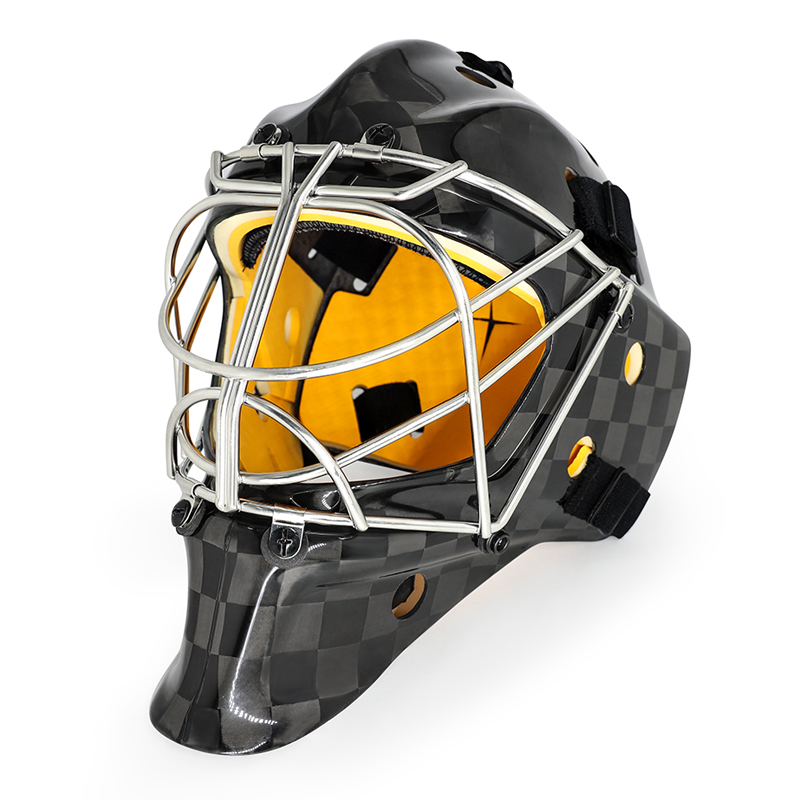
Goaltenders face entirely different impact profiles than skaters. They endure direct, high-velocity puck impacts to the head multiple times per game. Evaluating a goalie mask requires strict attention to the structural integrity of the fiberglass, Kevlar, or carbon fiber shell and the condition of the welded wire cage. Ensuring you possess a valid CE Approved Ice Hockey Goalie Helmet or HECC-certified mask is non-negotiable for crease safety. Goalie masks also expire after 6.5 years, as the internal foams and the structural resins in the shell degrade from sweat and impact fatigue.
High-quality protective gear requires a solid investment. To justify this, divide the cost of a premium model by its 6.5-year lifespan. When viewed as an annual safety expense, the investment in advanced rotational impact technologies—such as fluid pods or suspended matrices designed to mitigate concussive forces—becomes highly logical. Spending $300 on a premium model equates to roughly $46 per year for top-tier brain protection.
Purchasing replacement gear comes with its own set of pitfalls. Navigating the retail landscape requires vigilance to ensure you maximize the lifespan of your new equipment and avoid dangerous secondary markets.
Buying used protective headgear online or at a secondhand sports store is a massive safety risk. You have no way of verifying the equipment's impact history. A shell might look pristine on the outside while harboring microscopic internal cracks from a massive collision the previous season. Furthermore, used gear often has missing or expired certification stickers, rendering it useless for sanctioned play. Never buy used head protection.
Retailers frequently heavily discount "brand new" models from previous seasons to clear inventory. Beware of the New Old Stock trap. If a model has been sitting in a warehouse for three years, its 6.5-year HECC clock has already been ticking. You are effectively cutting its certified lifespan in half before you even step on the ice. Always check the manufacturing date stamped on the box or the sticker inside the shell before purchasing discounted gear.
To ensure your new equipment physically lasts until its legal expiration date, implement strict maintenance habits immediately after purchase.
Air dry your gear immediately after every use. Remove it from your hockey bag and place it in a well-ventilated area to prevent sweat acidity from degrading the foam and rusting the hardware.
Perform routine screw tightening every month. Vibrations from skating and impacts cause screws to back out over time.
Replace rusted hardware immediately. A rusted screw will snap during an impact, causing the cage to detach and exposing your face to injury.
Avoid storing your gear in extreme heat. Leaving your bag in a hot car trunk during summer warps the polycarbonate plastics and melts the adhesives holding the foam blocks in place.
Check the HECC, CSA, or CE sticker on the back of your current equipment today to verify the exact expiration date.
Perform a physical audit by pressing the internal foams to check for hardening and inspecting all screws and J-clips for rust or structural damage.
If your gear is expired or physically degraded, immediately visit a specialized hockey retailer to get professionally fitted for a current-year certified model.
Implement a strict post-game drying routine to protect the internal foams and hardware of your new equipment from acidic sweat degradation.
A: No. Once it passes its 6.5-year expiration date, it cannot be recertified. The internal foams and plastics degrade over time, making it impossible to guarantee the equipment meets safety standards for impact absorption.
A: Even if unused and stored in a climate-controlled environment, they expire 6.5 years from the date of manufacture. The chemical composition of the protective foams naturally hardens and degrades over time, regardless of physical use.
A: Yes. Goalie masks are subject to the same HECC and CSA certification timelines. They expire 6.5 years after the manufacturing date due to the degradation of internal foams and the stress on the outer shell materials.
A: In sanctioned leagues, wearing expired equipment results in an immediate equipment violation. The referee will force you to leave the ice until you can replace the uncertified equipment with a legally compliant, unexpired model.
A: Yes. The physical sticker is the only accepted proof of certification. If you remove, alter, or obscure the HECC, CSA, or CE sticker, officials will deem the equipment uncertified and illegal for sanctioned play.
A: Replacing rusted hardware improves structural integrity and prevents cages from detaching. However, new screws do not reverse foam degradation or extend the legal expiration date of the shell itself.
A: NHL players operate under different collective bargaining agreements and equipment management protocols. Professional equipment managers constantly swap out internal padding and hardware, though players are strongly encouraged to wear current, certified models.


