

- Home
- Products
- HOT
- Technology
- Service
- Resources
- About
- Contact
- All
- Product Name
- Product Keyword
- Product Model
- Product Summary
- Product Description
- Multi Field Search

Views: 0 Author: Site Editor Publish Time: 2026-08-04 Origin: Site


Pucks routinely exceed 80 mph during competitive play. The kinetic energy transferred to the head requires highly specialized impact management systems. Misunderstanding helmet classifications introduces severe physical risks to players. Using a standard skater headpiece in the crease significantly increases the risk of severe traumatic brain injury. It also exposes athletes to facial trauma and permanent dental damage. Purchasing uncertified or low-grade goalie masks carries the same catastrophic risks.
We must establish a technical evaluation framework for comparing headgear. You need to understand the structural differences between a standard player headpiece and a specialized goalie mask. This guide examines material composition, impact deflection mechanics, and safety certifications. These technical dimensions will directly guide your purchasing decisions and ensure maximum on-ice safety.
Impact Mechanics: Player helmets are engineered for multi-directional impact absorption (boards, ice, body checks), whereas goalie masks are designed for high-velocity, localized frontal projectile deflection.
Terminology Distinction: Skaters wear an "ice hockey helmet" designed for multi-impact mobility; goalies wear a "goalie mask" (or hybrid helmet-mask) designed for rigid facial shielding and deflection.
Material Discrepancies: Standard player helmets utilize high-density polycarbonate shells; elite goalie masks require rigid composites like fiberglass, Kevlar, or carbon fiber to prevent shell flex.
Cost and Value: A certified, protective goalie mask requires a significantly higher baseline investment (typically starting around $500) compared to a player helmet due to advanced composite materials and specialized backplate systems.
Fit Criticality: Proper sizing—whether fitting a youth player or sourcing an Adult XL Ice Hockey Goalie Helmet—is the primary variable in concussion mitigation; a poorly fitted premium helmet performs worse than a perfectly fitted mid-tier helmet.
The goalie community actively rejects the term "helmet" in favor of "mask." This terminology debate stems from fundamental structural differences on the ice. Skaters wear helmets. These are two-piece, adjustable plastic cranial covers. They prioritize weight reduction, ventilation, and the direct absorption of body check forces. They leave the lower face exposed unless equipped with a full cage. When you look at a skater on the bench, their headgear is designed to be lightweight and breathable. The two-piece design allows the shell to slide and adjust, which helps absorb the blunt force of hitting the boards or the ice.
Goalies wear masks. Modern goalie masks are single-piece, form-fitting composite shells. They cover the entire face and jaw completely. Masks use molded slopes and aggressive angles. These angles deflect direct projectile impacts away from the head. The design prevents the puck's kinetic energy from transferring directly into the skull. A goalie mask acts more like a shield. It is a rigid barrier that forces the puck to glance off, rather than absorbing the impact directly into the padding.
This distinction carries a historical legacy. Early goalies wore vintage form-fitting fiberglass face molds. These early molds sat directly against the skin. They offered minimal padding and transferred a significant amount of shock to the face. Modern equipment evolved into hybrid masks. These modern designs combine the rigid frontal deflection of early molds with suspended backplate systems. This evolution shaped current terminology and established modern safety standards. The transition from a simple face plate to a full-coverage composite shell revolutionized goaltender safety and allowed the position to evolve into the butterfly style we see today.
Understanding this terminology is the first step in evaluating equipment. When a parent or player asks for a helmet for a goalie, equipment managers immediately correct them. You do not wear a helmet in the crease. You wear a mask designed specifically to handle high-velocity rubber projectiles. Mixing up these terms often leads to purchasing the wrong equipment, which can have devastating consequences on the ice.
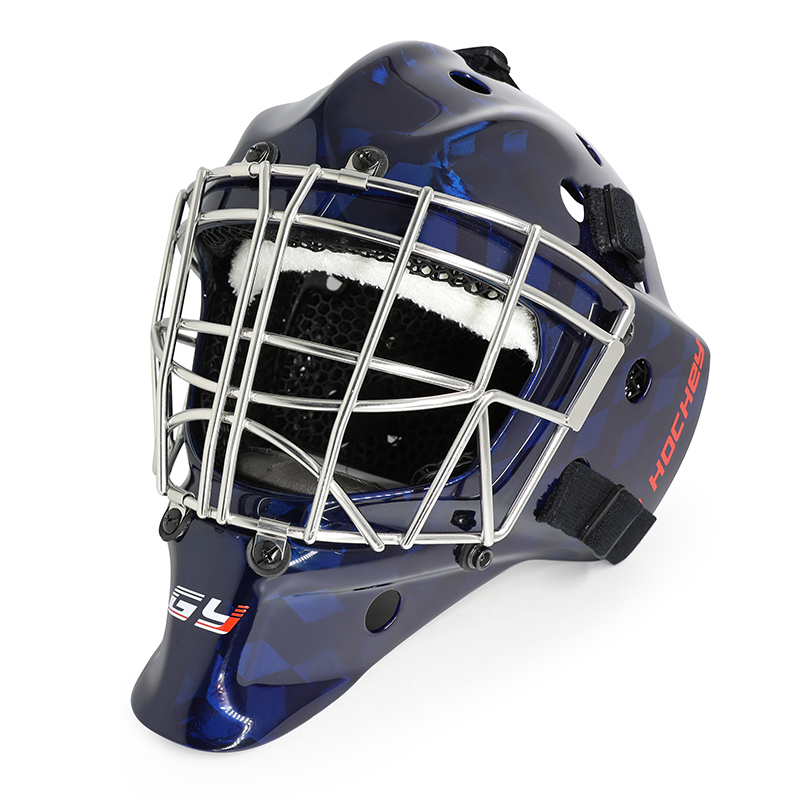
We must define what success looks like for each position. Players require peripheral vision, maximum ventilation, and lightweight mobility. They need headgear that moves seamlessly with their bodies. Goalies require absolute frontal coverage. They need throat protection integration and zero shell deformation upon puck impact. The physical demands of each position dictate the engineering of the equipment.
Player headgear focuses on multi-impact absorption. The two-piece shell design allows for micro-adjustments. Players can expand or contract the shell for a precise fit. The rounded, aerodynamic shape disperses kinetic energy. It handles broad, blunt-force impacts effectively. This includes hitting the glass, crashing into the boards, or falling onto the ice. When a player takes a shoulder to the head, the two-piece shell flexes slightly. This flexion, combined with the internal foam, slows down the acceleration of the head. It mitigates the rotational forces that often lead to concussions.
Goalie masks prioritize high-velocity deflection. The single-piece frontal shell construction eliminates structural weak points. Two-piece designs would shatter under direct puck impacts. The angular, sloped forehead and chin design serves a specific mechanical purpose. It deflects pucks outward and away. It prevents the shell from absorbing the force directly into the skull. If a goalie takes a slapshot to the forehead, the angle of the mask forces the puck to skip off the surface. This deflection reduces the total kinetic energy transferred to the goalie's head.
The design philosophy extends to the back of the head as well. Player helmets offer uniform protection around the entire skull. Goalie masks utilize a separate backplate. This backplate is secured by a five-point harness. It protects the back of the head during falls but is primarily designed to keep the frontal shell securely anchored against the face. The backplate floats independently, allowing the mask to fit snugly against the jaw and forehead without creating pressure points.
Ventilation also highlights the differing design philosophies. Player helmets feature numerous vents to exhaust heat during intense shifts. Goalie masks have limited ventilation holes. Every hole in a goalie mask is a potential weak point in the structural integrity of the shell. Manufacturers must balance the need for airflow with the absolute requirement for structural rigidity. This is why goalies often sweat significantly more than players and require specialized sweatbands inside their masks.
Raw materials dictate the lifespan and protective ceiling of the equipment. We evaluate these materials based on how they handle specific impact types. The choice of material is the single most important factor in determining whether a piece of headgear belongs on a skater or a goaltender.
Feature | Polycarbonate Shells (Players) | Composite Shells (Goalies) |
|---|---|---|
Primary Material | High-impact plastics | Fiberglass, Kevlar, Carbon Fiber |
Flexibility | High (absorbs blunt force) | Zero (prevents shell cave-in) |
Impact Response | Flexes upon impact | Deflects high-velocity projectiles |
Weight | Lightweight | Heavier, dense construction |
Manufacturing Process | Injection molded | Hand-laid and pressed |
Polycarbonate shells serve as the player standard. High-impact plastics offer flexibility, weight reduction, and manufacturing efficiency. However, polycarbonate fails under direct, high-velocity puck impacts. Shell flex transfers energy directly to the face and jaw. This makes plastic shells entirely unsuitable for goaltenders facing heavy shots. When a plastic shell takes a direct hit from a puck, it deforms inward. This deformation can cause the internal padding to strike the player's head with significant force.
Composite shells represent the strict goalie requirement. Manufacturers layer fiberglass, Kevlar, and carbon fiber. These rigid composites prevent the mask from caving in. They protect the orbital bones, nose, and jaw from catastrophic fractures. The rigidity ensures the kinetic energy disperses across the entire shell rather than localized points. A well-built composite mask will sound like a solid piece of stone when tapped. This rigidity is what keeps the goaltender safe when facing shots exceeding 80 mph.
Buyers must avoid the plastic mask trap. Entry-level, injection-molded plastic goalie masks flood the beginner market. These pose severe safety risks against adult-level shots. A plastic mask will flex or shatter upon impact. A minimum fiberglass baseline is absolutely required for any goaltender facing elevated pucks. You can easily identify a plastic mask by pressing firmly on the chin or forehead. If the shell flexes under hand pressure, it will not survive a direct puck impact.
The manufacturing process also differs significantly. Player helmets are mass-produced using injection molding machines. This allows for rapid production and consistent sizing. Goalie masks, particularly high-end models, are often hand-laid. Technicians layer sheets of fiberglass and Kevlar into a mold, apply resin, and press the shell under high pressure. This labor-intensive process ensures the composite matrix is dense and free of air voids, which would compromise the structural integrity of the mask.
Internal components manage the energy not deflected by the outer shell. Player liners differ significantly from goalie mask padding systems. The foam inside the headgear is responsible for decelerating the head and preventing the brain from impacting the inside of the skull.
Player liners utilize dual-density foams. Manufacturers use vinyl nitrile (VN) foams or expanded polypropylene (EPP) foams. VN offers a softer, traditional fit. It compresses easily and provides excellent comfort. EPP provides rigid, bicycle-helmet-style protection. It is highly effective at managing high-energy impacts but requires softer comfort foams layered on top to prevent pressure points. Many modern designs incorporate suspended matrix liners. These manage rotational impacts during checks and awkward falls.
Goalie mask internal structures require different engineering. Masks use thicker, mechanically attached, or glued-in specialized foam padding. This dense foam dampens the ringing effect. It absorbs the shock of heavy, point-blank shots. The foam in a goalie mask is often less forgiving than player foam. It needs to be dense enough to prevent the shell from bottoming out against the skull during a high-velocity impact. The backplate and five-point harness system secure the mask. The backplate absorbs rear-impacts if the goalie falls backward onto the ice.
Vulnerability and dislodgement represent a hidden danger. A goalie mask can become dislodged during puck or body contact. This leaves the head completely exposed. USA Hockey and Hockey Canada enforce strict whistle protocols. Play must be whistled dead immediately when a goalie's mask is dislodged. Player headgear coming off requires the skater to skate immediately to the bench. The rules reflect the extreme danger of a goaltender facing shots without facial protection.
Hardware maintenance prevents premature dislodgement. You must inspect your equipment regularly to ensure it functions correctly on the ice.
Inspect the harness straps for loss of elasticity or fraying edges.
Check all snap clips for rust or metal fatigue.
Tighten all screws securing the cage to the shell.
Examine the internal foam for signs of hardening or detachment from the shell.
Replace the sweatband regularly to prevent bacteria buildup and foam degradation.
Ignoring hardware maintenance leads to catastrophic failures. A loose screw can cause the cage to detach during an impact. A rusted snap clip can break, causing the mask to fly off during a scramble in the crease. Equipment managers spend significant time replacing hardware to ensure the headgear remains secure under extreme stress.
Visibility requirements dictate the hardware attached to the headgear. Skaters and goaltenders process visual information differently on the ice. The type of facial protection used directly impacts a player's ability to track the puck and anticipate the play.
Players utilize standard wire cages and half-shields. Skaters emphasize downward and peripheral vision. They need clear sightlines for stickhandling, passing, and avoiding open-ice checks. Half-visors provide maximum visibility but leave the jaw exposed. Full cages offer complete protection using thin, lightweight wire grids. The wire used in player cages is designed to stop sticks and pucks, but it can dent under heavy impacts. The primary goal is to prevent lacerations and dental trauma without obstructing the player's field of view.
Goalie cages require massive structural reinforcement. They use thicker wire and deeper integration into the shell. The cage must withstand direct, high-velocity impacts without deforming inward and striking the goalie's face. HECC-certified straight-bar cages provide excellent protection. The grid pattern is tight enough to prevent stick blades from penetrating. Non-certified Cat-Eye cages offer maximum visibility. The wire is bent to create large openings directly in front of the eyes.
However, Cat-Eye cages carry a catastrophic risk. Stick blades or puck corners can penetrate the larger eye openings. This can lead to severe ocular trauma or permanent blindness. Always verify league rules regarding cage certifications before playing. Most youth and amateur leagues strictly prohibit the use of non-certified Cat-Eye cages. Professional goaltenders often accept the risk of Cat-Eye cages for the slight advantage in puck tracking, but amateur players should prioritize safety and use certified straight-bar or certified Cat-Eye options.
The attachment points for goalie cages are also heavily reinforced. Player cages attach with simple clips and screws. Goalie cages use heavy-duty stainless steel hardware and rubber dampeners. These dampeners help absorb the shock of a puck striking the cage, reducing the ringing sensation in the goalie's ears. Inspecting these attachment points is a critical part of routine equipment maintenance.
Headgear only performs as engineered through proper sizing. You must ensure the equipment fits flush against the skull without pressure points. A poorly fitted premium mask will offer less protection than a perfectly fitted entry-level model.
Sizing protocols require measuring head circumference. Use a soft tape measure to determine the circumference of the head just above the eyebrows. Match this measurement to manufacturer-specific sizing charts. Sourcing an Adult XL Ice Hockey Goalie Helmet presents specific challenges. Larger head shapes often require custom mold options. You may need aftermarket foam adjustments to eliminate pressure points at the temples or jawline. Standard retail masks may not accommodate exceptionally wide or long head shapes, necessitating specialized fitting services.
Implementation risks arise from poor fitting practices. Never buy headgear for a youth player to grow into. Oversized equipment creates dangerous gaps. These gaps negate foam impact absorption entirely. If the headgear shifts during movement, the foam cannot decelerate the head effectively during an impact. Signs of a poor fit include forehead gaps, chin cup misalignment, cheek pinching, and harness shifting during movement.
To achieve a proper fit, follow a systematic approach.
Open the helmet to its maximum size setting before placing it on the head.
Adjust the length until the front padding sits flush against the forehead, just above the eyebrows.
Ensure the occipital lock or backplate cups the base of the skull securely.
Tighten the chin strap so it makes contact with the chin, preventing the helmet from rolling forward.
Shake the head vigorously from side to side; the equipment should not shift independently of the head.
For goaltenders, the chin cup must fit snugly against the chin. If the chin cup is too loose, the mask will drive upward into the nose during a frontal impact. If it is too tight, it will restrict jaw movement and cause severe discomfort. Take the time to adjust the five-point harness evenly, ensuring equal tension across all straps.
Navigating the regulatory landscape of hockey equipment ensures legal and safe play. Every ice hockey helmet must pass rigorous testing standards before it can be sold or used in sanctioned leagues.
HECC, CSA, and CE approvals dictate legal usage in sanctioned leagues. These organizations test equipment for impact resistance and structural integrity. They drop weighted headforms onto steel anvils to measure the G-forces transferred through the padding. They also fire pucks at the cages to ensure the wire does not deform or break. Equipment that passes these tests receives a certification sticker.
Helmet stickers feature expiration dates. These typically expire 6.5 years after manufacturing. Materials degrade over time. Foams harden and plastics become brittle due to UV exposure, sweat, and temperature fluctuations. Expired equipment offers compromised protection. Referees in sanctioned leagues will check these stickers before games. If your equipment is expired, you will not be allowed on the ice. Always check the manufacturing date before purchasing used equipment.
We must acknowledge concussion mitigation realities. The CDC guidelines state biomechanical realities clearly. No headgear is concussion-proof. Equipment primarily prevents skull fractures, brain bleeds, and superficial trauma. Concussion prevention remains a secondary benefit. It relies entirely on proper fit and foam integrity. When a player sustains a concussion, it is often due to rotational forces that cause the brain to twist inside the skull. Current technology cannot eliminate these rotational forces entirely.
Choosing a certified Ice Hockey Helmet ensures you have the best available protection against catastrophic structural failures. Do not modify the shell or remove internal padding to achieve a better fit. Any modifications void the safety certifications and significantly increase the risk of injury. If the equipment does not fit correctly out of the box, try a different brand or model.
Position-specific headgear remains an absolute necessity. A player headpiece cannot survive the crease. A goalie mask is structurally incompatible with playing out. Prioritize fit and composite materials over brand aesthetics. Follow these action steps to ensure maximum safety:
Get professionally fitted at a dedicated hockey retailer to eliminate dangerous foam gaps.
Set a strict baseline requirement for fiberglass or composite construction when purchasing goalie masks.
Check your specific league rules regarding cage certifications and Cat-Eye legality.
Verify the manufacturing date and HECC/CSA expiration stickers before finalizing any purchase.
A: No. A player cannot wear a goalie mask due to restricted peripheral vision and excessive weight. A goalie cannot wear a player helmet because the two-piece plastic shell will shatter under direct, high-velocity puck impacts, offering zero facial or throat protection.
A: A player helmet is a two-piece, adjustable plastic shell designed to absorb blunt force from falls and checks. A goalie mask is a rigid, single-piece composite shell designed to deflect high-velocity pucks away from the face and jaw.
A: Goalie masks require expensive raw materials like fiberglass, Kevlar, and carbon fiber to prevent shell deformation. They also feature complex, hand-laid construction, specialized backplate harnesses, and thicker, impact-dampening foam systems.
A: Certified headgear typically expires 6.5 years from the date of manufacture. Over time, internal foams harden and outer plastics become brittle due to sweat, UV exposure, and repeated impacts, compromising overall safety.
A: Plastic injection-molded goalie masks are only suitable for young children facing low-velocity shots. Any goaltender facing adult-level shots must use a fiberglass or composite mask to prevent the shell from flexing and transferring energy to the skull.


