
- Home
- Products
- HOT
- Technology
- Service
- Resources
- About
- Contact
- All
- Product Name
- Product Keyword
- Product Model
- Product Summary
- Product Description
- Multi Field Search

Views: 0 Author: Site Editor Publish Time: 2026-11-28 Origin: Site


Equipment buyers frequently face a frustrating trade-off between optical clarity and moisture management. Manufacturer claims rarely align with harsh on-ice realities. Polycarbonate shields inherently struggle against extreme temperature differentials and relentless physical abrasion. Choosing the right Ice Hockey Visor requires looking past flashy marketing jargon. You must understand the actual chemical limitations of factory coatings.
This guide provides equipment managers and players with a skeptical, evidence-based framework. We will help you evaluate, test, and select visors based on actual rink conditions and strict durability requirements. By understanding how coatings fail, you can make smarter purchasing decisions. You will learn how to simulate real-world stress tests before outfitting an entire team. Ultimately, this approach ensures better player safety and clearer vision on the ice.
No visor is permanently immune to both fog and scratches; factory coatings degrade based on cleaning habits and rink environments.
Anti-fog performance should be tested against high-humidity, low-airflow scenarios (e.g., sitting on the bench), not just during active skating.
Anti-scratch efficacy is best evaluated by the hardness of the outer coating and its resistance to micro-abrasions from standard gear-bag friction.
Hockey visor coating durability relies heavily on user compliance with specific maintenance protocols (e.g., avoiding harsh chemical solvents).
Understanding visor degradation requires a basic grasp of thermodynamics and material science. Polycarbonate is incredibly impact-resistant. However, it is naturally vulnerable to surface damage and temperature fluctuations. Manufacturers apply chemical layers to mitigate these weaknesses. These layers inevitably break down over time.
Players generate massive amounts of radiating body heat during a shift. Ambient rink air remains cold and often damp. This extreme temperature differential forces moisture to condense directly onto the polycarbonate surface. Warm air holds more moisture than cold air. When a sweating player exhales, the warm breath hits the cold plastic shield. The air rapidly cools and drops its moisture payload. This creates thousands of microscopic water droplets. These droplets scatter incoming light, creating the blinding white haze we call fog.
Rink environments are highly abrasive. Ice crystals fly up from skates. Stick tape rubs against helmets during face-offs. Players hastily wipe their faces using rough bench towels. These actions create micro-scratches across the plastic surface. Individually, these scratches remain invisible to the naked eye. Cumulatively, they ruin optical clarity. Light refracts off these jagged microscopic grooves instead of passing cleanly through the shield. This refraction causes visual distortion, forcing players to strain their eyes to track the puck.
Chemical engineers face a difficult trade-off when designing protective layers. Hydrophilic anti-fog treatments absorb water to prevent droplet formation. They spread moisture into a thin, transparent film. Unfortunately, hydrophilic chemicals are inherently soft. They scratch easily under minimal friction. Conversely, hard-coat anti-scratch layers use dense, rigid polymers. These hard layers resist physical abrasion beautifully. However, their dense structure inhibits moisture dispersion. You cannot easily layer a soft, water-absorbing chemical over a hard, water-repelling shell. This chemical conflict explains why most shields excel at one function while failing at the other.
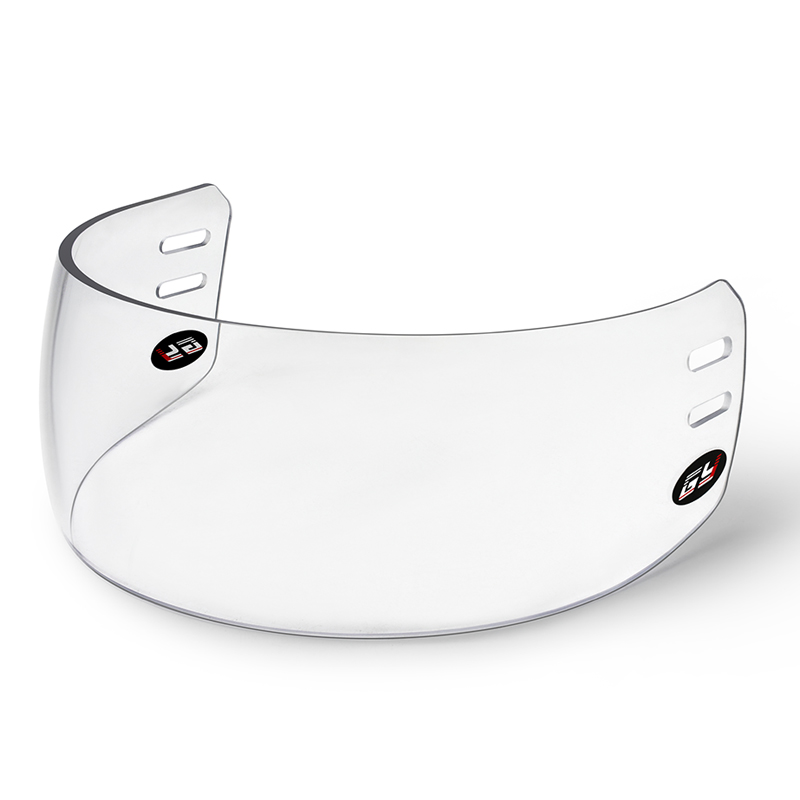
Marketing materials often show players skating at full speed with perfectly clear vision. This represents a flawed testing metric. Forward momentum generates heavy airflow. Airflow naturally clears condensation. The true test of an anti fog ice hockey visor happens when the player stops moving.
A successful shield must maintain optical clarity during the transition from high-exertion shifts to stationary resting. Players experience the highest fog risk while sitting on the bench. Heart rates remain elevated. Body heat radiates intensely. Airflow drops to zero. The shield must manage this sudden moisture spike without blinding the player before their next shift.
Equipment buyers should ignore factory claims and conduct independent evaluations. You need to replicate the exact conditions of a crowded, humid bench.
The "Bench Simulation": Expose the shield to heavy, warm moisture in a cold environment. Do this with zero airflow. You can simulate this by holding the shield over a steaming cup of water inside a cold room. Alternatively, have a heavily sweating player wear it while sitting perfectly still in the locker room.
Recovery Time: Measure the exact number of seconds it takes for the fog to dissipate. Reintroduce a slight breeze to simulate stepping back onto the ice. A premium coating should clear the haze within three to five seconds. Anything longer poses a safety hazard during rapid line changes.
Factory anti-fog coatings are notoriously fragile. They often wash away or degrade after 15 to 20 uses. Players frequently sabotage these coatings unknowingly. They use standard locker room soaps or abrasive cotton towels. These materials strip the hydrophilic layer instantly. Equipment managers must enforce strict cleaning protocols. Use only specialized sprays and clean microfiber cloths. Otherwise, even the most expensive factory coating will fail within a month.
Physical durability dictates the functional lifespan of protective headgear. A heavily scratched shield compromises peripheral vision. It creates dangerous blind spots. Evaluating an anti scratch hockey visor requires distinguishing between catastrophic impacts and daily wear-and-tear.
The shield must resist micro-abrasions from standard handling. It must survive incidental contact inside a crowded gear bag. Most importantly, it must maintain perfect optical clarity. The player's peripheral vision cannot suffer from hazy patches or refracted glare under bright arena lights.
Do not test durability by hitting the plastic with a hammer. Impact resistance is standardized by safety certifications like HECC or CSA. Instead, test the surface hardness against common locker room friction.
The "Dry Wipe" Test: Evaluate the surface resistance using a dry microfiber cloth. Apply firm pressure and rub the center of the shield repeatedly. This simulates a rushed, aggressive wipe-down on the bench. Inspect the area under a harsh light. Look for swirling micro-scratches. A high-quality hard coat will show zero marks.
Distortion Check: Hold the shield at arm's length. Flex it slightly inward, mimicking how it mounts to a helmet. Look through the curved edges at a straight line on the wall. Check for factory-level optical distortion. Poorly manufactured plastics warp light before any scratches even occur.
Buyers often mistake "anti-scratch" for "scratch-proof." No plastic on earth can withstand a direct slash from a composite stick blade. Deep gouges will ruin any shield instantly. The actual goal is preventing the hazy buildup of micro-scratches over a long season. Educate players on proper storage. Tossing an unprotected helmet into a bag full of sharp skates guarantees premature coating failure.
Manufacturers attempt to solve the chemical conflict by combining technologies. They apply different treatments to the inside and outside of the plastic. Evaluating hockey visor coating durability requires understanding how these dual systems are manufactured.
The industry generally relies on two different manufacturing methods. Each carries distinct advantages and inherent flaws.
Integrated Polycarbonate Blends: Some manufacturers bake anti-fog properties directly into the plastic mixture before molding. This co-extrusion process creates a permanent moisture-management system. It lasts much longer than topical treatments. However, these models are significantly more expensive to produce.
Surface-Level Sprays/Dips: Budget models feature a hard outer shell and a sprayed inner shell. The factory dips the plastic into a chemical bath. This creates a temporary barrier. These surface layers are highly prone to flaking, peeling, or wiping off entirely after repeated friction.
Equipment buyers must weigh upfront costs against long-term maintenance realities. A cheaper unit might require constant replacement.
Table: Coating Technology Comparison
Coating Technology | Initial Price Point | Scratch Resistance | Fog Resistance | Estimated Lifespan |
|---|---|---|---|---|
Basic Surface Dip | Low ($30 - $40) | Poor | Moderate (Fades Fast) | 1 - 2 Months |
Dual-Sided Hard Coat | Medium ($50 - $60) | Excellent | Poor (Needs aftermarket spray) | 4 - 6 Months |
Integrated Blend | High ($80+) | Good | Excellent | 6 - 8 Months |
Consider longevity versus price. Does an $80 premium model outlast three $30 budget models? Usually, yes. You must also calculate maintenance overhead. Does the shield require proprietary re-coating sprays to maintain its warranty? Factor these ongoing chemical costs into your purchasing budget.
Be highly skeptical of brands claiming lifetime fog and scratch immunity. Physics dictates these claims are false. Look for transparent replacement warranties instead. Reliable manufacturers provide clear, specific care instructions. They openly acknowledge the limitations of their chemical treatments. Avoid brands relying on vague buzzwords without publishing their testing methodologies.
No single product dominates every category perfectly. Equipment managers must tailor their purchases to specific team needs. Analyze your home rink environment and your players' physical habits.
Some older arenas lack proper dehumidification systems. The air feels heavy and damp. If your team plays in these environments, prioritize premium anti-fog integration. Accept a shorter lifespan regarding scratches. Budget for mid-season replacements. A scratched shield is annoying, but a fogged shield is completely blinding. Player safety demands clear vision during high-speed play. Invest in integrated polycarbonate blends for these specific rosters.
Highly competitive leagues feature aggressive stick work. Incidental contact happens constantly. For these rosters, prioritize anti-scratch hard coatings and baseline optical clarity. You must protect the plastic from rapid physical degradation. Supplement the weaker moisture management with aftermarket anti-fog gels. Enforce strict bench-towel discipline. Teach players to dab their faces rather than aggressively wiping the plastic.
Do not commit to a massive team order blindly. Follow a systematic procurement process to mitigate financial risk.
Audit current helmet compatibility: Ensure the shortlisted models fit securely on Bauer, CCM, and Warrior helmets. Check the mounting hardware for rust resistance.
Purchase a trial unit: Buy one unit of the shortlisted model. Give it to your heaviest sweater for a rigorous 2-week trial. Gather honest feedback regarding bench fog and glare.
Standardize the cleaning protocol: Issue dedicated microfiber cloths to every player. Ban standard locker room towels. Supply only manufacturer-approved cleaning sprays. This establishes an accurate baseline for evaluating true durability.
Selecting the optimal protective shield is fundamentally an exercise in risk management. You must balance the immediate, dangerous threat of fog blindness against the long-term financial cost of scratch degradation. No factory coating defies the laws of physics forever. Polycarbonate will eventually succumb to the harsh realities of the rink.
Base your purchasing decisions on the specific environmental challenges of your home arena. Prioritize moisture management for humid rinks and physical durability for aggressive leagues. Commit your roster to strict maintenance protocols. Proper cleaning habits maximize the return on investment for whichever coating technology you prioritize. By testing rigorously and ignoring marketing hype, you ensure your players maintain clear, safe vision all season long.
A: With proper care, factory coatings typically maintain peak efficacy for 3 to 6 months of regular play. You must avoid harsh chemicals and use only microfiber cloths. After this initial period, the hydrophilic layer naturally degrades. You will then need to supplement the shield with aftermarket anti-fog sprays to maintain clear vision.
A: No. Polishing or buffing a scratched polycarbonate surface will strip the remaining protective coatings entirely. This process alters the plastic's thickness unevenly, causing severe optical distortion. Once a shield sustains noticeable scratches that impede peripheral vision, you must replace it immediately for safety reasons.
A: Yes. Standard dish soaps contain powerful degreasers and chemical surfactants. These ingredients are designed to strip oils. They will rapidly strip hydrophilic anti-fog layers from the plastic. Over time, harsh soaps can also degrade the polycarbonate's structural integrity, making it more brittle and prone to cracking upon impact.
A: Not always. Sprays containing alcohol or ammonia can cause "crazing" on certain hard-coated plastics. Crazing refers to a network of microscopic cracks that ruin optical clarity and weaken the shield. Always verify chemical compatibility with the specific manufacturer before applying any aftermarket gel or spray.


